
What Size Generator Do I Need?
Add running loads and the largest motor start (DOL ×3, star-delta ×2, soft starter ×1.5), add 20%, then kVA = kW ÷ 0.8. Worked example included.
Contents
To find the generator size, add up the running power of your equipment, then add the extra power the largest motor draws at start-up; apply a safety margin of approximately 20% and divide by the 0.8 power factor to get the kVA rating. In short: kVA ≈ (running load + largest starting difference) × 1.2 ÷ 0.8. The motor starting method (direct-on-line, star-delta, soft starter) is the factor that changes the result most.
Step 1: List the loads
List all the equipment the generator will supply and write down the active power (kW) of each. This information is usually on the equipment rating plate. When preparing the list, separate:
- Resistive loads: Lighting, heaters, ovens, socket loads. They draw no extra power at start-up.
- Motor loads: Pumps, booster pumps, lifts, compressors, fans, on-off air conditioners. They draw several times their running power at start-up.
- Electronic loads: Computers, UPS units, drives (VFDs), LED drivers. They can generate harmonics; for large UPS and drive loads, the manufacturer’s recommendation should be obtained.
Including only the loads that really need to run during an outage prevents choosing an unnecessarily large generator.
Step 2: Add up the running load
Add up the power of the equipment that can run at the same time. This is the running load the generator must supply continuously. If there are several identical units, remember to multiply by the quantity.
Step 3: Add the largest starting load
Induction motors draw a high current for a short time at start-up. The generator must handle this moment without an excessive drop in voltage and frequency. The typical multipliers used in our power calculator are:
| Starting method | Power drawn at start-up (approximate) |
|---|---|
| Direct-on-line (DOL) starting | ~3 times running power |
| Star-delta | ~2 times running power |
| Soft starter | ~1.5 times running power |
Motors do not usually start at the same time. So the calculation adds not the starting difference of every motor, but the largest single starting difference: extra power = motor power × (multiplier − 1). Where motors may start simultaneously (e.g. all pumps coming online together when the mains returns), either staggered start-up should be arranged or the calculation increased accordingly.
Step 4: Safety margin and kVA conversion
A margin of approximately 20% is added on top of the peak load. This margin covers future loads, calculation uncertainties and keeps the generator from running at its continuous limit. Then convert to kVA using the 0.8 power factor, the standard assumption for diesel generators:
kVA = kW ÷ 0.8
Worked example
A small business: lighting and socket loads 6 kW, office and inverter air conditioners 4 kW, one 11 kW pump. Running load: 6 + 4 + 11 = 21 kW.
| Pump starting | Starting difference | Peak load | ×1.2 | ÷0.8 |
|---|---|---|---|---|
| Direct-on-line | 11 × 2 = 22 kW | 43 kW | 51.6 kW | ≈ 65 kVA |
| Star-delta | 11 × 1 = 11 kW | 32 kW | 38.4 kW | ≈ 48 kVA |
| Soft starter | 11 × 0.5 = 5.5 kW | 26.5 kW | 31.8 kW | ≈ 40 kVA |
Simply by changing the pump’s starting method, the same site can run on a 40 kVA generator instead of approximately 65 kVA. This is why using a soft starter or variable frequency drive on large motors directly affects the generator investment.
Common mistakes
- Forgetting the starting load: On a site where the running load looks small, a lift or pump start can overload the generator.
- Confusing kW and kVA: A 100 kVA generator is not enough for a 100 kW requirement; approximately 125 kVA is needed.
- Oversizing: A diesel engine running continuously at very low load can suffer from unburnt fuel build-up (wet stacking). An oversized generator increases both investment and operating costs.
- Ignoring the standby/prime distinction: A generator that will run continuously should be selected on prime power, not standby; see our article on standby vs prime vs continuous power for details.
- Not accounting for high altitude and temperature: Engine power can fall at high altitude and in hot environments (derating); values should be checked against the manufacturer’s data sheet.
When is a professional analysis needed?
This method is sufficient for a preliminary selection. For lift groups, large pumping stations, loads dominated by UPS units and drives, medical equipment, data centres and industrial plants, however, voltage dip, harmonics and load steps should be analysed in detail. This analysis is based on the motor and alternator data sheets.
Run the calculation now
Use the power calculator to select your equipment, set the starting method and see the result instantly; then list matching models with the generator finder. For project-specific support on Terex Diesel sets in the 10–4,125 kVA range, contact us.
Planning a generator for a project?
Send us the power, voltage and destination. We reply with a suitable model, the factory price and the lead time within 24 hours on working days.
Frequently asked questions
How is generator power calculated?
Add up the running power (kW) of all equipment, add the extra power the largest motor draws at start-up, apply a safety margin of approximately 20% and divide the total by the 0.8 power factor to get kVA: kVA = (running load + largest starting difference) × 1.2 ÷ 0.8.
How do I convert kW to kVA?
A standard power factor of 0.8 is assumed for diesel generators. So kVA = kW ÷ 0.8 and kW = kVA × 0.8. For example, an active power requirement of 80 kW corresponds to a generator of approximately 100 kVA.
How much does motor starting affect generator size?
Considerably. With typical values, a motor draws approximately 3 times its running power with direct-on-line starting, approximately 2 times with star-delta starting and approximately 1.5 times with a soft starter. Changing the starting method of a large pump can noticeably reduce the generator power required.
Featured models
Technical data of models in frequently requested power ratings:
- 38 kVATRX QZ TA 0038Quartz Q490ZD
- 58 kVATRX QZ TA 0058Quartz Q4105D
- 77 kVATRX QZ TA 0077Quartz Q4105ZD
- 105 kVATRX QZ TA 0105Quartz Q4105AZLD
- 155 kVATRX QZ TA 0155Quartz Q6105AZLD
- 260 kVATRX SD TA 0260SDEC SC9D310D2
- 300 kVATRX SD TA 0300SDEC SC9D340D2
- 400 kVATRX SD TA 0400SDEC SC15G500D2
- 520 kVATRX SD TA 0520SDEC SC25G610D2
Related articles
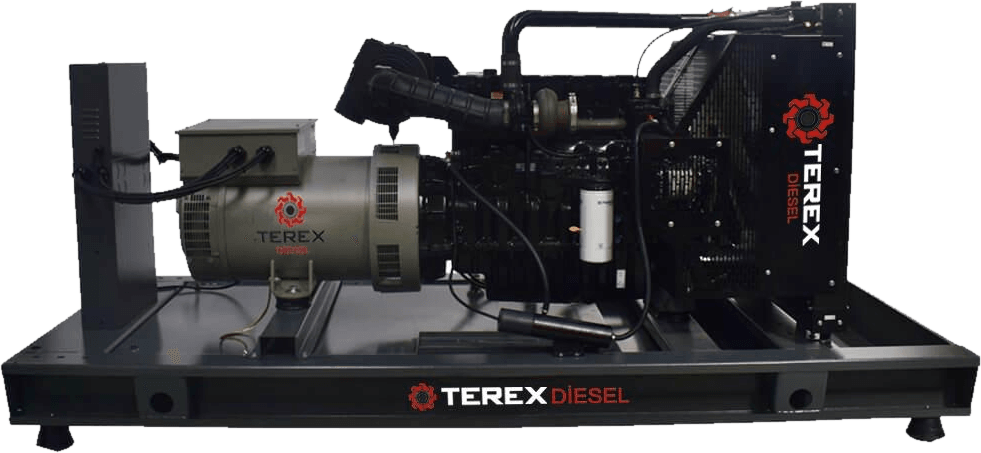
Standby vs Prime vs Continuous Power
Standby: outages only, ≤200 h/year, no overload. Prime: unlimited hours at variable load, typically 10% overload 1 h in 12. Continuous: constant load.
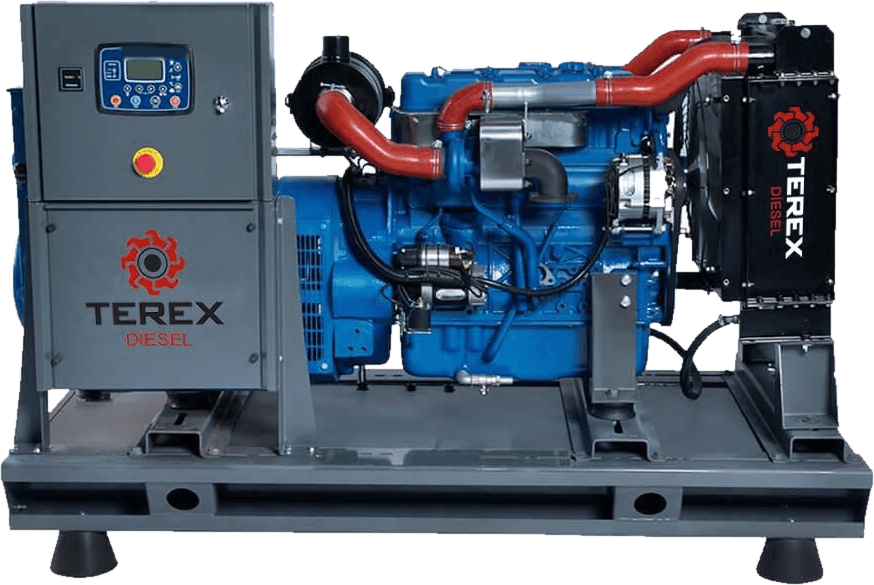
Single-Phase or Three-Phase?
Single phase vs three phase generator: choosing by phase, voltage and current, unbalanced loads and supplying single-phase loads from a 3-phase set.

Choosing a Silent (Canopied) Generator
How to choose a silent generator: dB(A) at 7 metres, sound power vs sound pressure, soundproof canopy design, silencers and the right placement.
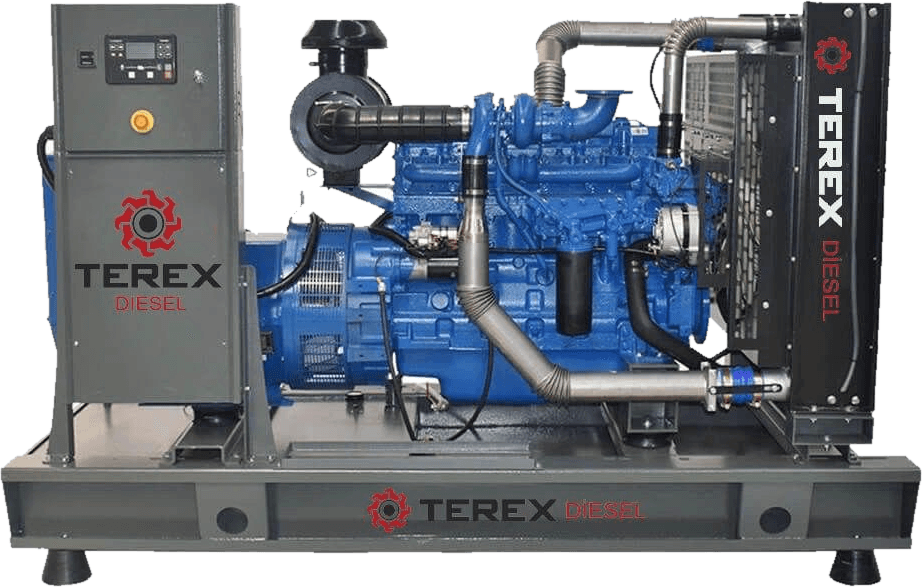
50 Hz vs 60 Hz Generators
50 Hz vs 60 Hz generator: 1,500 vs 1,800 rpm, engine and alternator power change, 60 Hz voltages, fuel and noise effects. Don't use a fixed multiplier.
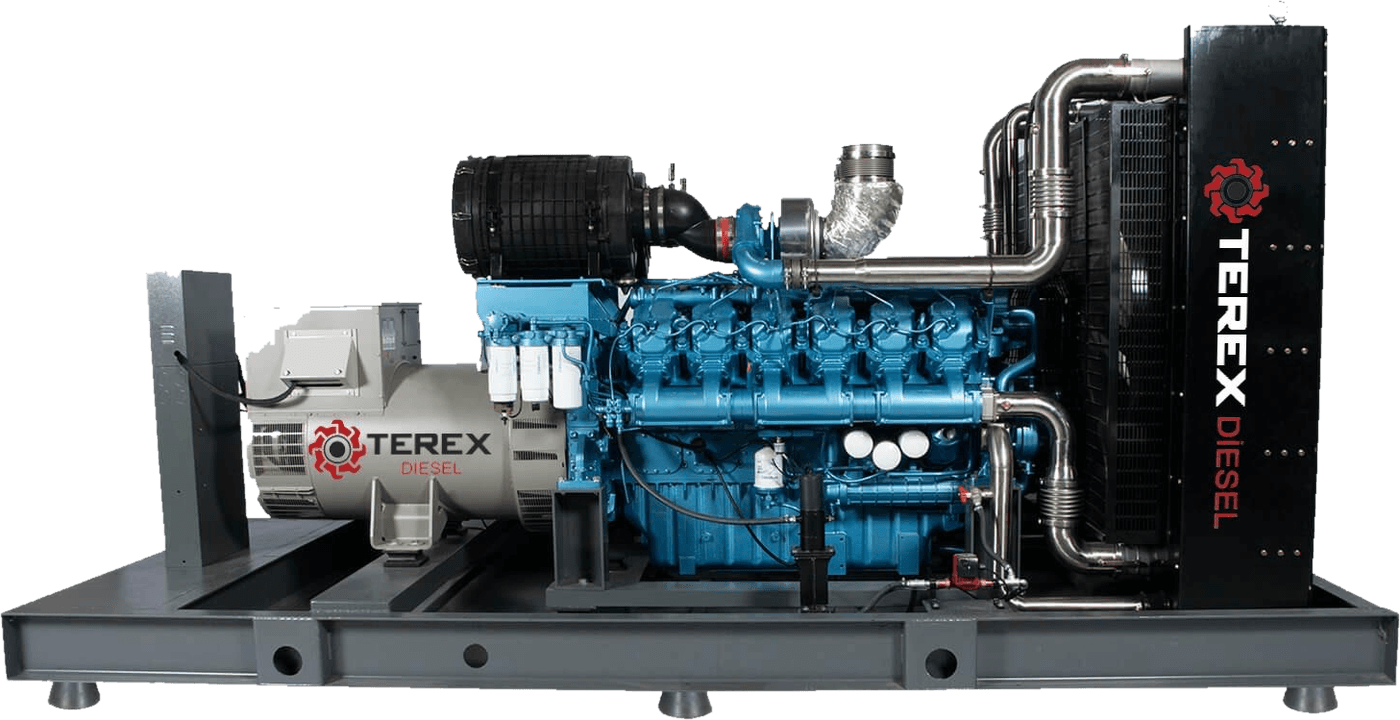
Generator Derating for Heat and Altitude
Why do generators lose power in heat and at altitude? ISO 3046 reference conditions, derating curves, alternator effects and a worked example.
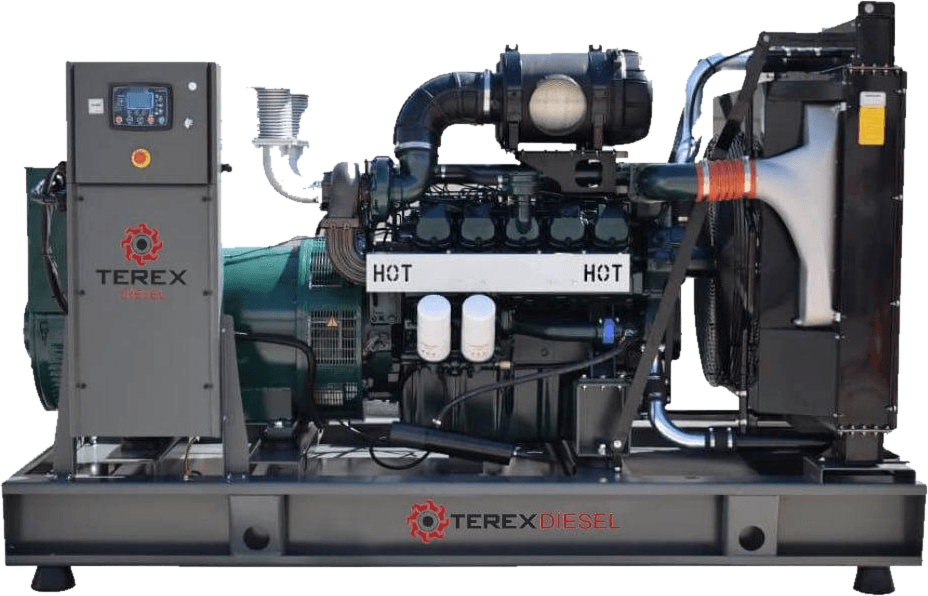
Generator Engine Brands Compared
Perkins, Cummins, Baudouin, FPT Iveco, Kofo, Kubota, Quartz, Scania, SDEC, Volvo Penta, Yangdong and Yuchai compared: origin, our power range, service network and use.