
Diesel and Gas Cogeneration (CHP)
Diesel and gas cogeneration (CHP): electricity and heat from one fuel with waste heat recovery. Gas and diesel engine systems, turnkey projects.
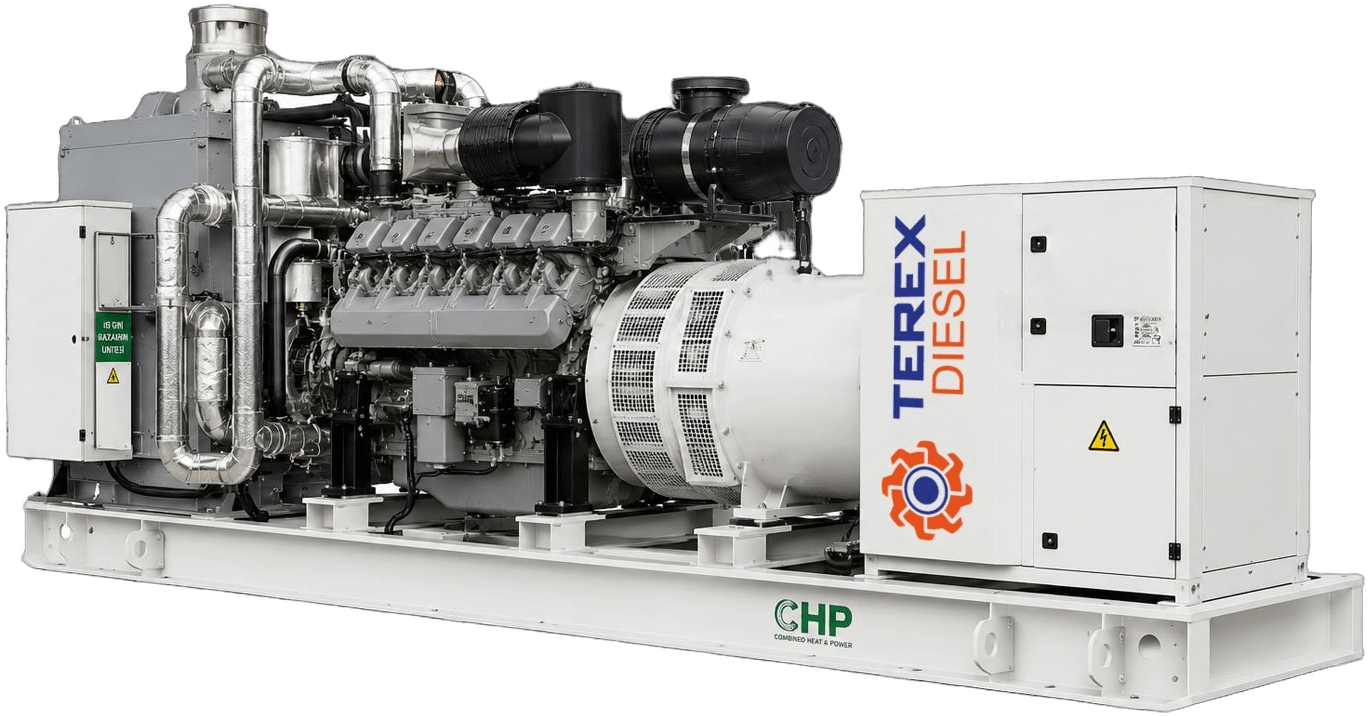
In conventional power generation, most of the energy in the fuel is lost as heat. Cogeneration (CHP – combined heat and power) recovers that heat: heat from the engine’s exhaust and cooling water is turned into hot water, steam or process heat. Electricity and heat are obtained from the same fuel, and overall energy efficiency can rise to as much as 90%. We build gas engine systems and diesel cogeneration systems for sites without a gas network.
We design every cogeneration system for its specific project, and deliver it turnkey, including panel manufacturing, automation, mechanical installation, on-site assembly, testing and commissioning.
How does cogeneration work?
- Electricity generation: An internal combustion engine drives the alternator and generates electricity.
- Cooling water heat recovery: Heat from the engine’s jacket water is transferred to a hot water circuit through a heat exchanger.
- Exhaust heat recovery: Exhaust gas is passed through a heat recovery exchanger or steam boiler to produce hot water or steam.
- Use of heat: The recovered heat is used for space heating, domestic hot water, process heat or greenhouse heating.
- Control: The system runs automatically according to the site’s electrical and heat load, either in parallel with the grid or independently of it.
Conventional generation and cogeneration
| Separate generation (grid electricity + boiler) | Cogeneration | |
|---|---|---|
| Electricity | Taken from the grid | Generated on site |
| Heat | Produced by burning fuel in a separate boiler | Recovered from the engine’s waste heat |
| Overall efficiency | Low because of heat losses | Up to 90% |
| Fuel consumption | Separate for electricity and heat | Both from a single fuel |
| Energy security | Dependent on the grid | Can run in parallel with the grid or independently |
Gas engine and diesel cogeneration
Gas engine systems: Configurations suited to natural gas, biogas and other gaseous fuels can be built. They are the usual solution for sites with long annual running hours and access to a gas network.
Diesel cogeneration: On sites without a gas network, heat from the exhaust and cooling water of diesel generator sets can also be put to use through heat recovery. Remote sites, mining and construction camps and off-grid facilities are typical users of this arrangement. We select our diesel sets from the 10–4,125 kVA range in our product catalogue according to the electrical load of the project; for commonly used ratings, see our 250 kVA, 500 kVA, 1000 kVA and 2000 kVA generator pages.
We compare gas and diesel engines in our article gas or diesel generator.
Main components of the system
- Engine–alternator set: The set that generates the electricity, selected according to the site’s electrical load.
- Jacket water heat exchanger: Transfers the heat of the engine cooling water to the hot water circuit.
- Exhaust heat exchanger or steam boiler: Produces hot water or steam from the heat of the exhaust gas.
- Dump radiator: Keeps the engine cooled when the heat demand falls.
- Control and synchronization panel: Manages the electrical and heat sides together and enables parallel operation with the grid.
Who is it for?
Businesses that need electricity and heat together, all year round:
- Industrial plants and businesses in organised industrial zones (process heat, steam)
- Hospitals and healthcare campuses (hot water, heating, sterilisation)
- Hotels and shopping centres (heating, domestic hot water, swimming pools)
- Data centres (cooling through trigeneration)
- Greenhouses (heating; use of exhaust gas depending on the project)
For cogeneration to be efficient, the heat must be used on a regular basis. On sites that need heat for only a few months of the year, feasibility is assessed against annual running hours.
Benefits
- Lower electricity and heating costs
- Waste heat converted into useful energy
- Less fuel and lower carbon emissions for the same energy
- Operation independently of the grid or in parallel with it
- Greater energy security for the site during grid outages
Parallel operation with the grid and synchronization
Cogeneration systems often run in parallel with the grid: the system covers part or all of the site’s electricity demand and the remainder is drawn from the grid. This requires a synchronization panel between the generator and the grid. In multi-engine systems the sets are also synchronized with each other, and the load is shared between them according to the heat demand. On large sites the system can be connected at medium voltage.
Turnkey project steps
- Feasibility: The electricity and heat consumption profile, annual running hours and fuel costs are reviewed.
- Design: Engine power, heat recovery equipment, panels and automation are defined.
- Manufacturing and installation: Panel manufacturing, mechanical installation and on-site assembly are carried out.
- Testing and commissioning: The system is tested and commissioned on both the electrical and the heat side.
- Operation and maintenance: The system is followed continuously with periodic maintenance and remote monitoring.
Information needed for a quotation
- Hourly or monthly electricity consumption
- Heat demand and its type (hot water, steam, process heat)
- Annual running hours and the fuel to be used
- Grid connection conditions and the existing heating system
Let us review your site’s energy profile together: request a quote. For installation and maintenance, see our installation and commissioning and generator service services.
Frequently asked questions
What is cogeneration?
Cogeneration (CHP) is a system that produces both electricity and heat from a single fuel at the same time. Because heat from the engine's exhaust and cooling water is recovered as hot water, steam or process heat, overall energy efficiency is much higher than with conventional generation and can reach up to 90%.
Which fuels can a cogeneration system use?
Depending on the project, cogeneration systems can be built for natural gas, biogas and other gaseous fuels. On sites without a gas network, heat from the exhaust and cooling water of diesel generator sets can also be put to use through heat recovery. The fuel is chosen according to the site's fuel access and running hours.
Who is cogeneration suitable for?
It suits businesses that need both electricity and heat all year round: industrial plants, hospitals, hotels, shopping centres, data centres, greenhouses and businesses in organised industrial zones. A steady heat demand is the key condition for the system's efficiency.
What is the difference between cogeneration and trigeneration?
Cogeneration produces electricity and heat together. In trigeneration, part of the recovered heat is converted into cooling by an absorption chiller, so electricity, heat and cooling are produced together. It is preferred on sites with a high cooling demand in summer.
Can a cogeneration system run in parallel with the grid?
Yes. With synchronization infrastructure, a cogeneration system can run in parallel with the grid and cover part or all of the site's electricity demand. Depending on the project, the system can also run independently of the grid when the mains fails.
What information is needed for a cogeneration project?
The site's hourly or monthly electricity consumption, the heat demand and its type (hot water, steam, process heat), annual running hours, the fuel to be used, grid connection conditions and details of the existing boiler or heating system.