
How Is a Generator Built?
How is a diesel generator made? Manufacturing steps from sheet metal cutting to the full-load test, with a 3D assembly video broken into chapters.
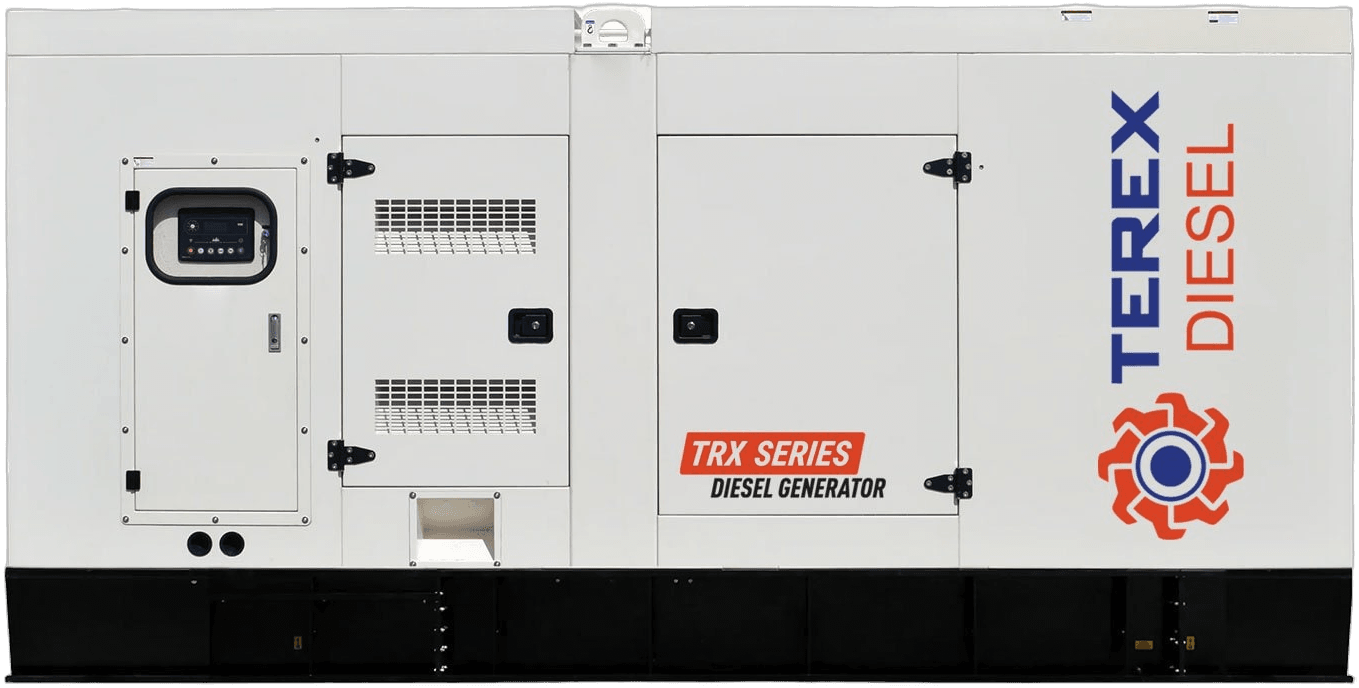
Assembly walkthrough (3D animation)
Step-by-step assembly of a generator set from base frame to canopy, shown on the DP-101 set (K4100D engine, 184G alternator).
Video transcript
Terex Diesel generator assembly. Four U125 mounts sit beneath the base frame.
Riser plate, U112 mount, engine foot, washer and nut: the parts come together.
The engine is supported by its two feet on the radiator side, each resting on an anti-vibration mount.
The alternator approaches on the same axis; the flanges meet and the bolts are fitted.
On this side you can see the air filter and the starter motor; the wiring harness runs along the engine.
Battery: 12 volts, 60 amp-hours. Heater: 72 watts.
The panels go in place and the roof is closed.
External fuel filling and exhaust outlet.
Terex Diesel.
A diesel generator is the result of turning an engine, an alternator, a base frame, a canopy and the fuel, cooling, exhaust and control systems into a single reliable unit. In the video below you can follow the assembly of a DP-101 set step by step, and further down you can read how a set is produced.
Production steps
- Design and sizing: The layout of the set is planned according to the power requirement, the choice of engine and alternator, the canopy type and the site conditions.
- Sheet metal cutting and bending: Canopy and base frame parts are cut on a CNC laser and bent on a CNC press brake.
- Surface treatment and painting: The parts are cleaned and coated with corrosion-resistant electrostatic powder paint.
- Base frame and anti-vibration mounts: The fuel tank and anti-vibration mounts are fitted to the base frame; the mounts isolate the engine’s vibration from the floor.
- Engine and alternator assembly: The engine is placed on the base frame, and the alternator is coupled to the engine with their shafts aligned.
- Cooling, exhaust and fuel lines: The radiator, exhaust silencer and fuel connections are installed; canopied sets also get an external fuel filler.
- Electrical system and control panel: The battery, battery charger, block heater and control panel are connected and the wiring is completed.
- Canopy assembly: The soundproof canopy panels, doors and air inlet and outlet louvres are fitted.
- Full-load test: The set is connected to a load bank and run at full load; voltage, frequency, temperature and the protection functions are checked.
- Packing and shipment: The set is packed and shipped together with its test report and documents.
Why it matters
Whether a generator runs trouble-free on site for years depends on each of these steps being done right: a poorly aligned engine–alternator connection means vibration and bearing failure, insufficient airflow means overheating, and incomplete testing means surprises just when you need power. That is why we test every set at full load before it ships.
You can see our production facility on our About Us page and find the right generator for your needs with our power calculator.
Planning a generator for a project?
Send us the power, voltage and destination. We reply with a suitable model, the factory price and the lead time within 24 hours on working days.
Frequently asked questions
How long does it take to manufacture a diesel generator?
It depends on the power rating, the canopy type and any project-specific requirements. For standard canopied sets, the process runs from sheet metal cutting through to testing and shipment; custom projects also include a design and approval stage. Contact us for current lead times.
How are the engine and alternator joined in a generator?
The engine and alternator are placed on a common base frame and joined through a coupling/disc connection with their shafts aligned. To keep vibration from passing into the base frame and the floor, the engine and alternator feet sit on anti-vibration mounts.
What tests does a generator go through before shipment?
At Terex Diesel, every set undergoes a full-load test before shipment. The test checks voltage, frequency, engine temperature, oil pressure and the protection functions; a set is shipped only if these values are within limits.
Featured models
Technical data of models in frequently requested power ratings:
- 38 kVATRX QZ TA 0038Quartz Q490ZD
- 58 kVATRX QZ TA 0058Quartz Q4105D
- 77 kVATRX QZ TA 0077Quartz Q4105ZD
- 105 kVATRX QZ TA 0105Quartz Q4105AZLD
- 155 kVATRX QZ TA 0155Quartz Q6105AZLD
- 260 kVATRX SD TA 0260SDEC SC9D310D2
- 300 kVATRX SD TA 0300SDEC SC9D340D2
- 400 kVATRX SD TA 0400SDEC SC15G500D2
- 520 kVATRX SD TA 0520SDEC SC25G610D2
Related articles
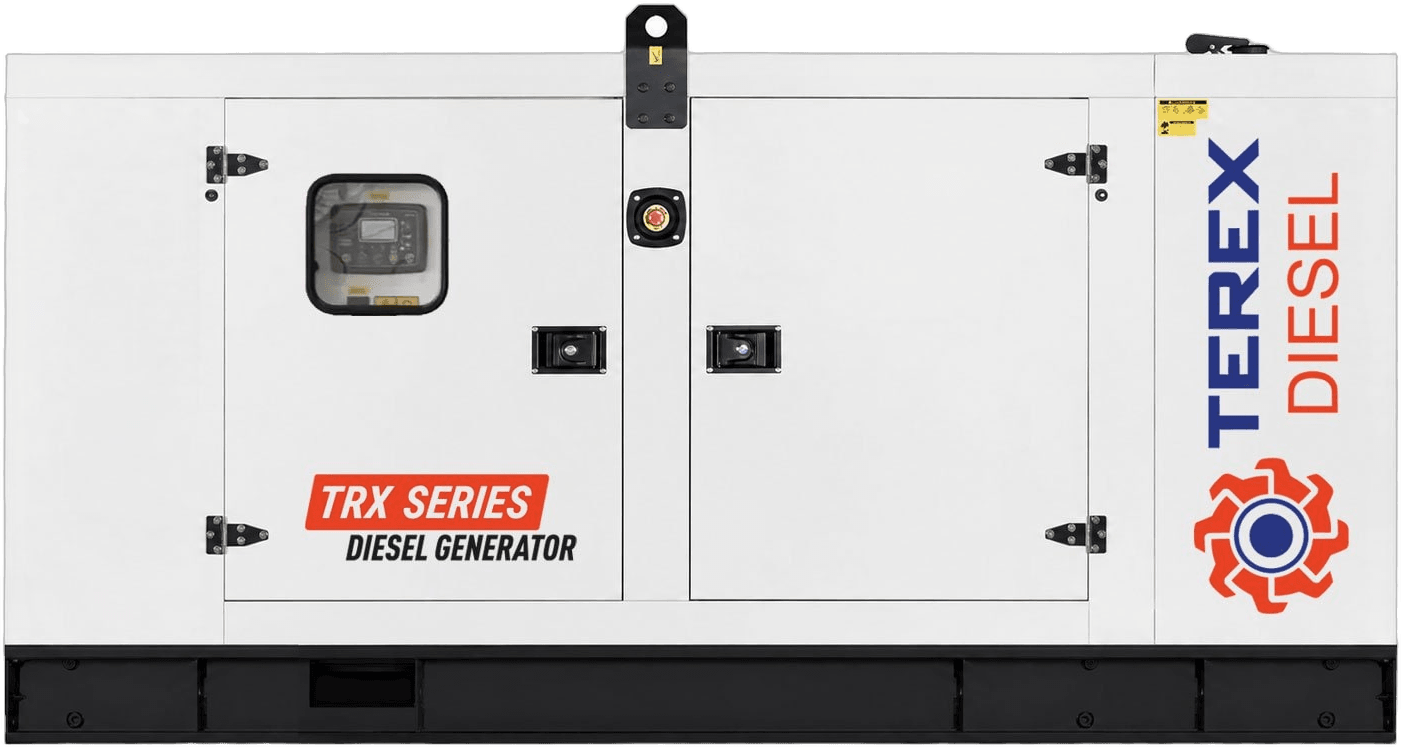
What Is a Diesel Generator?
What is a diesel generator, how does it work and where is it used? A short, clear guide to components, advantages, selection criteria and maintenance.
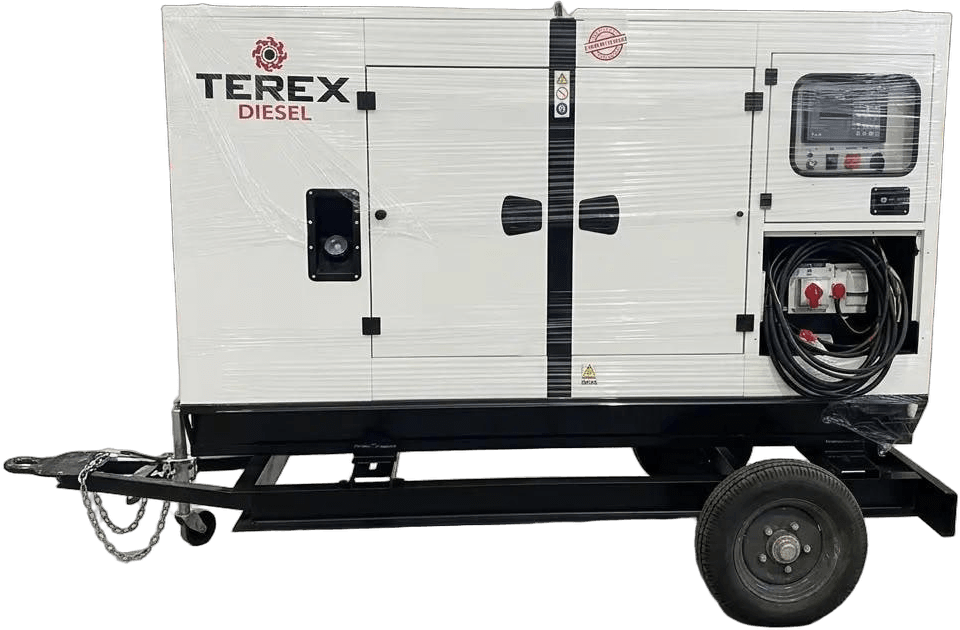
Rent or Buy a Generator?
Rent or buy a generator? An impartial decision guide covering duration, criticality, total cost, maintenance responsibility and example scenarios.
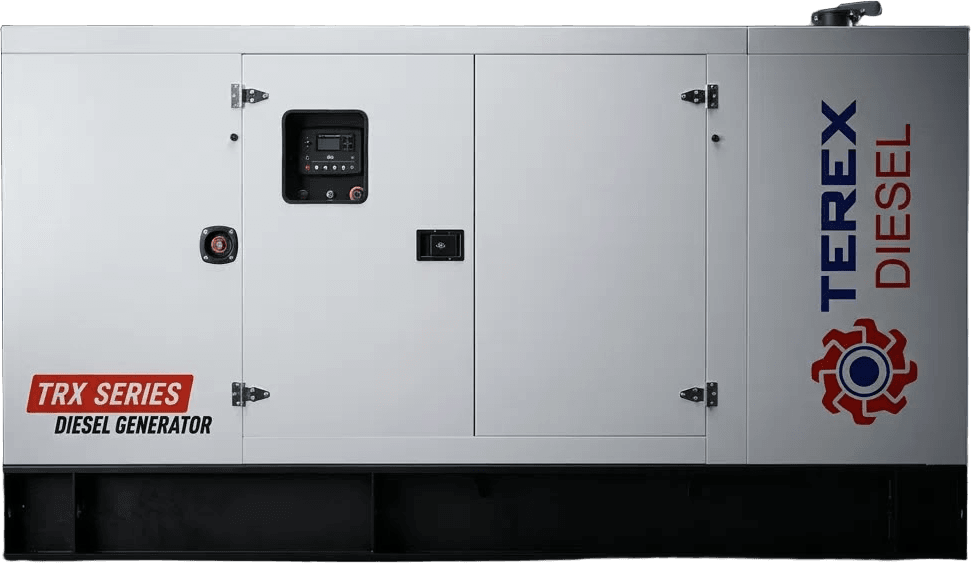
What Determines Generator Price?
Why are two generators of the same kVA priced differently? How engine, alternator, rating, canopy, panel, tank, installation and currency affect price.
Generator Buying Guide
In what order do you decide when buying a generator? A practical guide: load list, rating, phase, canopy, ATS, fuel, location and quote checks.
Importing a Generator from Türkiye: Supplier Checklist
How to check a Turkish generator supplier before you order: manufacturer or broker, component models in the quote, full-load test, documents, parts.
Gas or Diesel Generator?
Gas or diesel generator? An impartial engineering comparison of load acceptance, fuel supply, storage, running hours, emissions and maintenance.