
Medium Voltage Diesel Generator
Medium voltage generator: MV alternator set or 400 V set with step-up transformer. Lower losses, smaller cables and parallel operation for large sites.
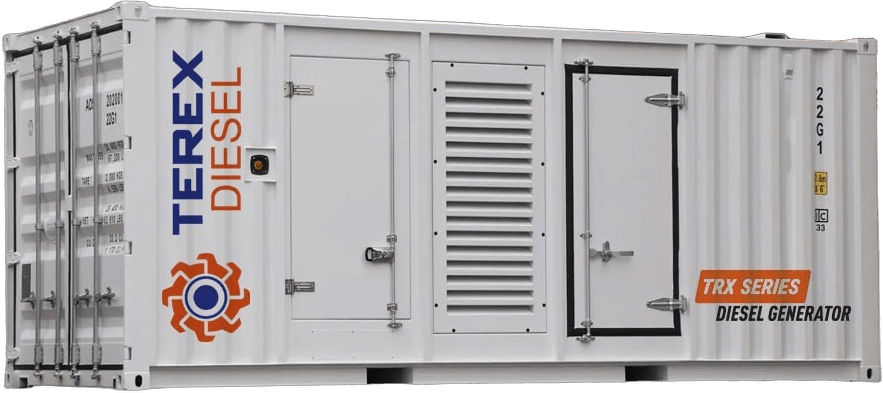
Large facilities usually distribute power at medium voltage (MV). A medium voltage diesel generator system is a generator installation built to deliver power directly at that medium voltage level. Rather than generating at low voltage (400 V) and carrying it over long distances, running the diesel generator at medium voltage means lower losses and thinner cables.
Medium voltage projects are always engineered to order. Power, voltage level, number of sets and protection requirements are assessed together, and the generator sets, switchgear and, where needed, the transformer are designed as one system.
Two basic configurations
Medium voltage generator systems use one of two configurations:
- Sets with medium voltage alternators: The alternator generates directly at medium voltage. The set has no separate step-up transformer.
- Low voltage set + step-up transformer: A standard 400 V generator set is used, and its output is raised to medium voltage by a step-up transformer.
| Set with MV alternator | 400 V set + step-up transformer | |
|---|---|---|
| Generator output | Directly at medium voltage | 400 V, raised to medium voltage by the transformer |
| Transformer | Not required | Step-up transformer required |
| Set selection | Configured with a medium voltage alternator | Selected from standard catalogue sets |
| Supplying 400 V loads | Separate step-down transformer required | 400 V loads can be supplied ahead of the transformer |
| Suitable projects | Very high power, sites with MV distribution | Connecting existing 400 V sets to MV, mixed loads |
Which configuration is suitable is decided at the design stage, based on total power, grid voltage level, distribution distance and the site’s existing infrastructure.
Why medium voltage?
For the same power, current falls as voltage rises. In practice this means:
- Lower losses: Voltage drop and heat losses are reduced over long transmission distances.
- Smaller cables and busbars: Instead of the many parallel cables and large busbars needed for currents of thousands of amperes at 400 V, smaller cross-sections are used.
- Compatibility with site infrastructure: On sites supplied at medium voltage, the generator connects to the existing MV distribution system; there is no need to install a separate generator at every transformer substation.
- Parallel operation: Several generators can run in parallel on a medium voltage busbar via a synchronization panel.
Synchronized operation at medium voltage
A high power demand is often met not by a single generator but by several sets running in parallel on a medium voltage busbar. The synchronization controllers match the voltage, frequency and phase angle of the sets, connect them to the busbar and share the load. When the load rises an additional set comes online; when it falls a set goes offline.
This arrangement also provides redundancy: while one set is under maintenance or has failed, the others continue to supply critical loads. Detailed information on parallel operation is in our article on generator synchronization and paralleling.
Protection and operation
In medium voltage systems the generator becomes part of the site’s medium voltage distribution system. The protection scheme is therefore considered together with the site’s existing protection:
- Circuit breaker and protection relays: Protections such as overcurrent, earth fault and reverse power are set according to the site’s short-circuit level.
- Earthing: The earthing method of the generator star point is chosen to suit the site’s medium voltage earthing system.
- Interlocking: The interlocking between the mains and generator circuit breakers is designed to prevent incorrect connections.
- Monitoring: The operating status, alarms and measurements of the sets are monitored from the panel and, where needed, remotely.
After commissioning, periodic maintenance and load tests keep the system ready to run at any time.
Which power ratings?
The sets used in medium voltage systems are selected from the high-power diesel generators in our product catalogue. In our catalogue, sets up to 1,100 kVA are supplied with a soundproof canopy, and sets above 1,100 kVA (1,250–4,125 kVA standby; Baudouin, Cummins and Perkins engines) as containerised generators.
You can browse the high-power sets by rating:
- 1000 kVA generator and 1250 kVA generator
- 1500 kVA generator and 2000 kVA generator
- 2500 kVA generator, 3000 kVA generator and 4000 kVA generator
For projects that need high power from two synchronized sets on a single base frame, see our dual generator sets.
Applications
- Large industrial plants and businesses in organised industrial zones
- Data centres and large telecoms centres
- Hospital and university campuses
- Mining sites and off-grid energy projects
- Shopping centres and large commercial buildings supplied at medium voltage
- Cogeneration plants
Design steps
- Needs analysis: Total power, load profile, duty (standby or prime) and critical loads are defined.
- Configuration: The MV alternator or 400 V set + step-up transformer configuration, the number of sets and the redundancy arrangement are decided.
- Switchgear and protection: Synchronization, breakers and protection are designed around the site’s MV distribution system.
- Installation location: Placement of the sets indoors, in canopies or in containers, the fuel system and the exhaust outlet are planned.
- Testing and commissioning: Every generator is tested at full load in our factory before shipment, and the system is commissioned on site with system tests.
Information needed for a quotation
- Total power demand and duty
- The site’s medium voltage level and frequency (50 Hz or 60 Hz)
- Number of sets and the need for parallel operation with the grid
- Distance between the generator and the MV distribution point
- Installation location and site conditions (ambient temperature, altitude)
With this information our engineers prepare the right configuration for you. Request a quote for your project; for installation see installation and commissioning, and for the operating period our generator service.
Frequently asked questions
What is a medium voltage generator?
A medium voltage (MV) generator is a generator system that produces electricity directly at medium voltage instead of low voltage (400 V), or raises it to medium voltage with a step-up transformer. At high power ratings and over long distribution distances it reduces losses and cable costs.
When is an MV generator the right choice?
It is preferred in projects where the total power demand is high, where the site is supplied at medium voltage, where the distance between the generator and the loads is long, or where several generators will run in parallel on a medium voltage busbar.
Should I choose a set with an MV alternator, or a low voltage set with a step-up transformer?
Both configurations are used. A set with a medium voltage alternator has no transformer and delivers medium voltage directly. The low voltage set with step-up transformer uses a standard 400 V set, and can supply both the site's 400 V loads and its medium voltage loads. The choice is made at the design stage according to total power, voltage level, distribution distance and existing infrastructure.
Can medium voltage generators run in parallel?
Yes. Several generators can run in parallel on a medium voltage busbar via a synchronization panel. This arrangement covers a high power demand with several sets and allows the others to keep running while one set is under maintenance.
What information is needed for a medium voltage generator quotation?
Total power and duty (standby or prime), the site's medium voltage level, frequency, number of sets, the need for parallel operation with the grid, the distance between the generator and the MV distribution point, the installation location (indoor, canopy or container) and details of the existing protection system.