
Generator kVA ↔ kW Conversion Table
kVA to kW for generators at power factor 0.8: formula, conversion table from 10 to 4,125 kVA, current at 400 V, and the kWm vs kWe difference.
Contents
Generator catalogues give power in kVA, while most loads are listed in kW. A “100 kW generator” and a “100 kVA generator” are therefore two different sets. This page gives the formula, a conversion table for our 10–4,125 kVA range and the current at 400 V.
The formula
Apparent power (kVA) and active power (kW) are linked by the power factor, cos φ. Three-phase diesel generator sets are rated at cos φ = 0.8:
- kW = kVA × 0.8
- kVA = kW ÷ 0.8
- Current at 400 V: I = kVA × 1,000 ÷ (√3 × 400) ≈ 1.44 A per kVA
Example: a 250 kVA set delivers 250 × 0.8 = 200 kW. A 200 kW load needs at least 200 ÷ 0.8 = 250 kVA, and more once motor starting and a reserve are added.
The tables below are calculated with these formulas. The exact standby and prime values of each model are on its own product page, because they depend on the engine and alternator fitted.
Sizing from a known load
If the total running load in kW is known: load ÷ 0.8 = minimum kVA. Then add the starting margin for the largest motor and a reserve of about 20%. A pump or compressor started direct-on-line draws several times its running current while starting, so the start, not the running load, can decide the size. Our power calculator gives a first estimate, and the article on what size generator you need goes through the steps.
Standby or prime: which kVA?
The same set has two ratings. Standby is for supply during mains failures with limited hours per year; prime is for unlimited hours under variable load and is lower. If one offer quotes standby and another quotes prime, you are comparing different sets. See standby, prime and continuous power.
Engine kW is not generator kW
Data sheets often show two kW figures: engine shaft power (kWm) and electrical output of the set (kWe). The engine figure is always higher, because the radiator fan and alternator losses take part of it. Only the electrical output counts when choosing a generator.
Common mistakes
- Buying “100 kVA” for a 100 kW load. That set gives 80 kW, with no reserve.
- Comparing engine kW with generator kW. The offers are then not comparable.
- Ignoring motor starting. The set stalls or the voltage dips when a pump or lift starts.
- Ignoring site conditions. In heat or at altitude the set delivers less; see derating for temperature and altitude.
Send us your list of loads and we will select the model: contact us.
kVA → kW conversion table (power factor 0.8)
| kVA | kW | Current at 400 V (A) | Models |
|---|---|---|---|
| 10 kVA | 8 kW | ≈ 14 A | — |
| 20 kVA | 16 kW | ≈ 29 A | 20 kVA |
| 30 kVA | 24 kW | ≈ 43 A | 30 kVA |
| 50 kVA | 40 kW | ≈ 72 A | 50 kVA |
| 75 kVA | 60 kW | ≈ 108 A | 75 kVA |
| 100 kVA | 80 kW | ≈ 144 A | 100 kVA |
| 150 kVA | 120 kW | ≈ 217 A | 150 kVA |
| 200 kVA | 160 kW | ≈ 289 A | 200 kVA |
| 250 kVA | 200 kW | ≈ 361 A | 250 kVA |
| 300 kVA | 240 kW | ≈ 433 A | — |
| 400 kVA | 320 kW | ≈ 577 A | 400 kVA |
| 500 kVA | 400 kW | ≈ 722 A | 500 kVA |
| 650 kVA | 520 kW | ≈ 938 A | 650 kVA |
| 800 kVA | 640 kW | ≈ 1,155 A | 800 kVA |
| 1,000 kVA | 800 kW | ≈ 1,443 A | 1,000 kVA |
| 1,250 kVA | 1,000 kW | ≈ 1,804 A | 1,250 kVA |
| 1,500 kVA | 1,200 kW | ≈ 2,165 A | 1,500 kVA |
| 2,000 kVA | 1,600 kW | ≈ 2,887 A | 2,000 kVA |
| 2,500 kVA | 2,000 kW | ≈ 3,608 A | 2,500 kVA |
| 3,000 kVA | 2,400 kW | ≈ 4,330 A | 3,000 kVA |
| 4,125 kVA | 3,300 kW | ≈ 5,954 A | — |
kW = kVA × 0.8; I = kVA × 1,000 ÷ (√3 × 400). Calculated values; the exact standby and prime rating of each model is on its product page.
Load (kW) → required generator size
| Load (kW) | Minimum (kVA) | With 20 % reserve (kVA) |
|---|---|---|
| 10 kW | 12.5 | 15 |
| 20 kW | 25 | 30 |
| 40 kW | 50 | 60 |
| 80 kW | 100 | 120 |
| 100 kW | 125 | 150 |
| 150 kW | 187.5 | 225 |
| 200 kW | 250 | 300 |
| 400 kW | 500 | 600 |
| 800 kW | 1,000 | 1,200 |
| 1,600 kW | 2,000 | 2,400 |
Motor starting is not included; with large direct-on-line motors the required size can be higher.
Planning a generator for a project?
Send us the power, voltage and destination. We reply with a suitable model, the factory price and the lead time within 24 hours on working days.
Get factory priceAsk on WhatsApp
We reply in English.
Frequently asked questions
How do you convert kVA to kW for a generator?
Three-phase diesel generators are rated at a power factor (cos φ) of 0.8. Multiply kVA by 0.8 to get kW: 100 kVA gives 80 kW, 500 kVA gives 400 kW. To go the other way, divide kW by 0.8.
How many kVA is a 100 kW generator?
100 kW ÷ 0.8 = 125 kVA. If 100 kW is the total load of the site, motor starting currents and a reserve of about 20% are added on top, so in practice a larger set is selected.
Why are generators rated in kVA and not in kW?
The alternator heats up with the total current, not only with the active power. Apparent power in kVA describes that current whatever the type of load, so the alternator and the set are rated in kVA and the kW figure is given at power factor 0.8.
What current does a 100 kVA generator deliver at 400 V?
For a three-phase 400 V system, I = S ÷ (√3 × U) = 100,000 ÷ (1.732 × 400) ≈ 144 A. Cables, circuit breakers and the ATS panel are sized on this current.
Featured models
Technical data of models in frequently requested power ratings:
- 38 kVATRX QZ TA 0038Quartz Q490ZD
- 58 kVATRX QZ TA 0058Quartz Q4105D
- 77 kVATRX QZ TA 0077Quartz Q4105ZD
- 105 kVATRX QZ TA 0105Quartz Q4105AZLD
- 155 kVATRX QZ TA 0155Quartz Q6105AZLD
- 260 kVATRX SD TA 0260SDEC SC9D310D2
- 300 kVATRX SD TA 0300SDEC SC9D340D2
- 400 kVATRX SD TA 0400SDEC SC15G500D2
- 520 kVATRX SD TA 0520SDEC SC25G610D2
Related articles
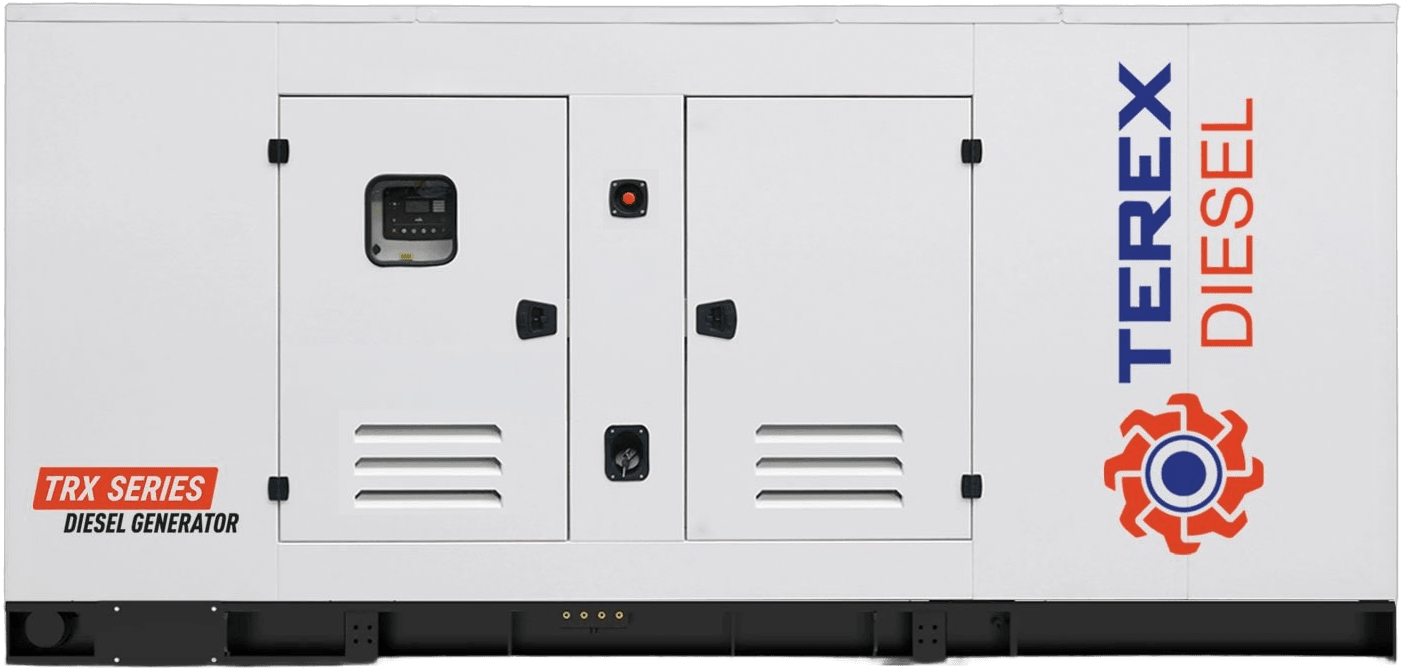
What Size Generator Do I Need?
Add running loads and the largest motor start (DOL ×3, star-delta ×2, soft starter ×1.5), add 20%, then kVA = kW ÷ 0.8. Worked example included.
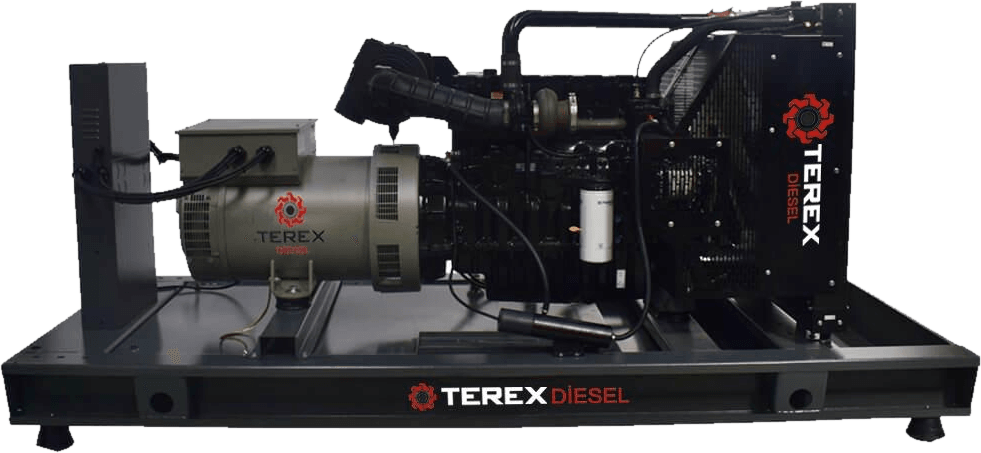
Standby vs Prime vs Continuous Power
Standby: outages only, ≤200 h/year, no overload. Prime: unlimited hours at variable load, typically 10% overload 1 h in 12. Continuous: constant load.
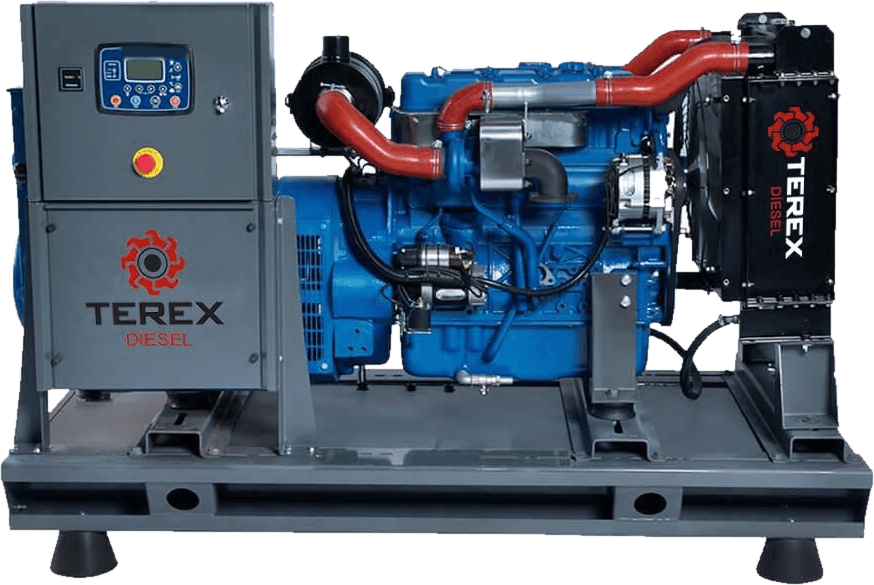
Single-Phase or Three-Phase?
Single phase vs three phase generator: choosing by phase, voltage and current, unbalanced loads and supplying single-phase loads from a 3-phase set.

Choosing a Silent (Canopied) Generator
How to choose a silent generator: dB(A) at 7 metres, sound power vs sound pressure, soundproof canopy design, silencers and the right placement.
50 Hz vs 60 Hz Generators
50 Hz vs 60 Hz generator: 1,500 vs 1,800 rpm, engine and alternator power change, 60 Hz voltages, fuel and noise effects. Don't use a fixed multiplier.
Generator Derating for Heat and Altitude
Why do generators lose power in heat and at altitude? ISO 3046 reference conditions, derating curves, alternator effects and a worked example.