
Sizing a Generator Fuel Tank
Tank volume = L/h × target hours ÷ 0.85. Example: 500 kVA at 75% load for 24 hours needs about 2,370 litres. Base tank, day tank and main storage.
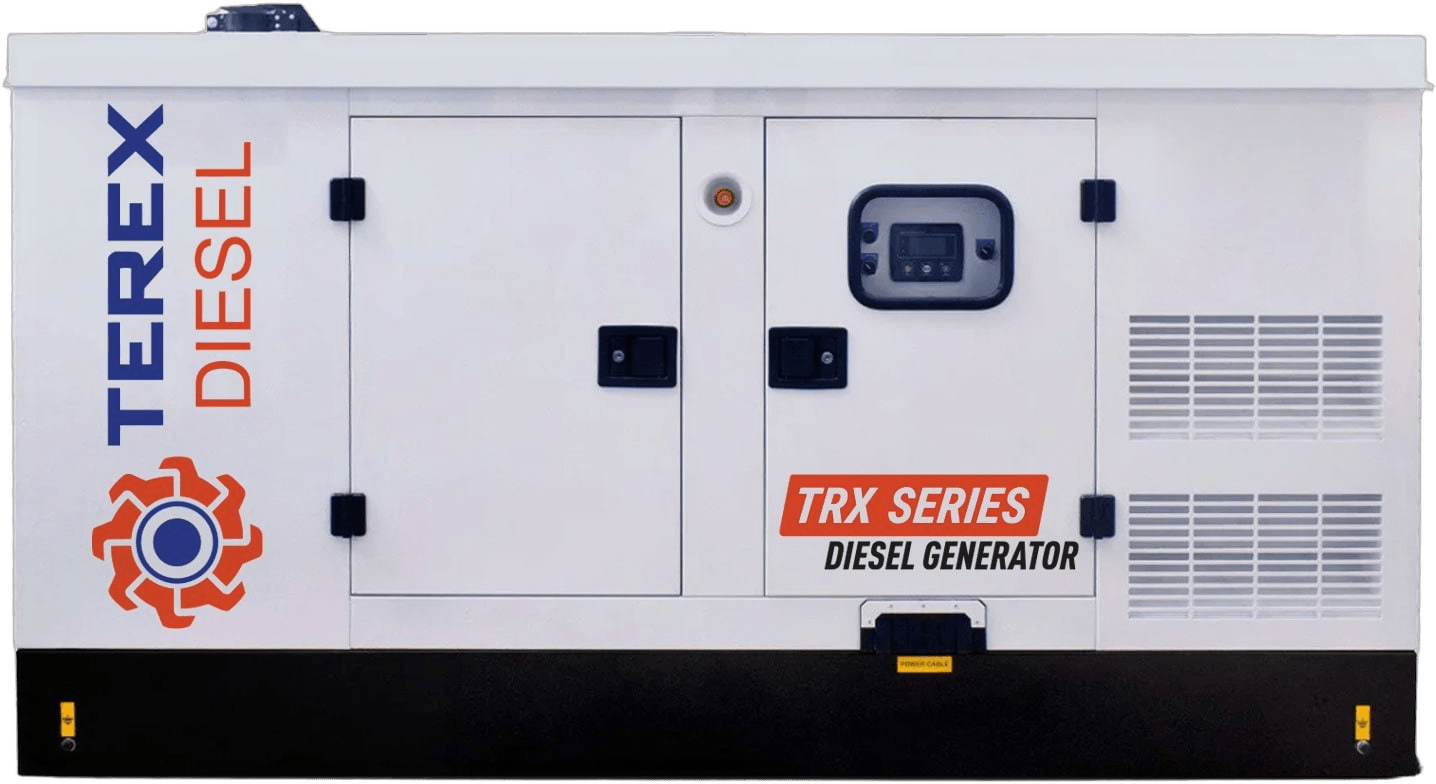
Contents
Even if a generator runs without problems, it will stop when the fuel runs out if the tank volume has not been calculated according to the outage duration and the refuelling time. Tanker deliveries can be delayed by several days, especially at weekends or in bad weather.
Tank volume is determined by how many hours the generator must run without refuelling:
Tank volume = hourly consumption × target runtime ÷ usable ratio
The calculation is simple. The hard part is choosing a realistic load factor and a realistic refuelling time.
Step 1: Find the hourly consumption
For a preliminary calculation, approximately 0.28 L/kWh at full load is used for diesel generators:
Full-load consumption (L/h) ≈ kW × 0.28 (kW = kVA × 0.8)
At part load, consumption does not fall in proportion to load. Typical ratios in our fuel consumption calculator: at 25% load ~35% of full-load consumption, at 50% load ~55%, at 75% load ~75%. Details are in our article how to calculate generator fuel consumption. The exact values are in the engine data sheet.
Step 2: Set the target runtime
Ask yourself: if the outage drags on, who brings the fuel, and how long does it take? In a city it might be a few hours. At the weekend, on a rural site or in bad weather, it can stretch to days. For homes and small businesses a few hours may be enough. In facilities such as hospitals, data centres and telecom sites, the target runtime is usually written into the project specification and is much longer.
Step 3: Don’t count the whole tank
The fuel at the bottom of the tank cannot be used. The volume below the suction pipe collects sediment and water; at the top, an expansion allowance is left. Drawing the tank right down carries sediment and air into the filters. For a preliminary calculation, approximately 85–90% of the tank volume is taken as usable:
Tank volume (L) = L/h × hours ÷ 0.85–0.90
Example table (at 75% load)
| Generator | kW | Consumption (75% load, approximate) | 8 hours | 24 hours | 48 hours |
|---|---|---|---|---|---|
| 100 kVA | 80 | 16.8 L/h | 134 L | 403 L | 806 L |
| 250 kVA | 200 | 42 L/h | 336 L | 1,008 L | 2,016 L |
| 500 kVA | 400 | 84 L/h | 672 L | 2,016 L | 4,032 L |
| 1,000 kVA | 800 | 168 L/h | 1,344 L | 4,032 L | 8,064 L |
| 2,000 kVA | 1,600 | 336 L/h | 2,688 L | 8,064 L | 16,128 L |
The table shows usable fuel. For the tank volume, divide by the usable ratio. Example: 500 kVA, 75% load, 24 hours → 2,016 ÷ 0.85 ≈ 2,370 litres of tank. Assuming full load stays on the safe side but makes the tank bigger.
Tank types
| Tank type | Where? | Typical use |
|---|---|---|
| Base (skid) tank | Under the generator | Most canopied sets; from a few hours to a working day |
| Extended base tank | Enlarged base frame | Outdoor sets where long autonomy is required |
| Day tank | Next to the generator, small volume | Systems fed from a main storage tank |
| Main storage tank | Above or below ground, mostly double-walled | Long autonomy, several generators |
In a system with a main storage tank, fuel is transferred to the day tank by a fuel transfer pump. The level float, overflow protection, return line and leak detection are part of the design. For canopied sets, the base tank is the most practical solution; see generator canopy.
Common mistakes on site
- The return line is connected to the wrong tank. A diesel engine sends part of its fuel back warmed up. If the return goes somewhere other than the day tank, the day tank either runs dry or overflows.
- The pump suction is not enough. The height difference or line length between the day tank and the engine exceeds the suction capacity of the lift pump. The generator stutters under load.
- The tank is bigger than necessary. On a set that runs a few hours a year, 5,000 litres of fuel is not turned over for years. Water and sediment build up, and filters clog.
- Water is never drained. Condensation collects at the bottom of the tank. A filter with a water separator and periodic draining are a must.
- No spill protection. A tank without a double wall or a spill containment bund creates an environmental problem at the smallest leak.
Regulations
Fuel storage above certain volumes is subject to fire and environmental regulations. In Türkiye, the Regulation on the Fire Protection of Buildings and local fire brigade rules are the basis for the tank’s location, volume and the precautions to be taken. The current regulations and the competent authorities should be checked at the design stage. For the generator room and layout, see our article on the generator room and installation.
Checklist
- Have the target runtime and the real refuelling time been determined?
- Has hourly consumption been checked against the data sheet at a realistic load factor?
- Have the bottom volume and expansion allowance been deducted?
- Is the base tank enough, or are a main storage tank and day tank needed?
- Are a return line, level control and overflow protection in place?
- Has a double wall or spill containment been provided?
- Have fire and environmental regulations been checked?
- Are fuel quality checks and water draining included in the maintenance plan?
Next step
Tank volumes for each model are given in the technical tables on the product pages. To work out the right tank solution for your target runtime with the Terex Diesel team, contact us.
Planning a generator for a project?
Send us the power, voltage and destination. We reply with a suitable model, the factory price and the lead time within 24 hours on working days.
Frequently asked questions
How is a generator fuel tank sized?
Tank volume = hourly consumption (L/h) × target runtime (hours) ÷ usable ratio. Hourly consumption is estimated as approximately kW × 0.28 × a load factor coefficient. For example, a 250 kVA (200 kW) generator at 75% load consumes about 42 L/h; for 24 hours it needs about 1,000 litres of usable fuel, which means a tank of about 1,100–1,200 litres once the bottom volume is allowed for.
How many hours does a base tank last?
The volume of the base (skid) tank varies by model and is usually designed to provide anywhere from a few hours to a working day of running at full load. If longer running is needed, a larger base tank or an external main storage tank with a day tank is used. The exact volume is given in the product data sheet.
How long can diesel sit in a tank?
When diesel fuel sits for a long time it can collect water, and sediment and microbial growth can form. It is hard to give an exact period; it depends on storage conditions and fuel quality. In tanks with low turnover, the fuel should be checked periodically, water and sediment drained, and the fuel renewed if necessary.
Featured models
Technical data of models in frequently requested power ratings:
- 38 kVATRX QZ TA 0038Quartz Q490ZD
- 58 kVATRX QZ TA 0058Quartz Q4105D
- 77 kVATRX QZ TA 0077Quartz Q4105ZD
- 105 kVATRX QZ TA 0105Quartz Q4105AZLD
- 155 kVATRX QZ TA 0155Quartz Q6105AZLD
- 260 kVATRX SD TA 0260SDEC SC9D310D2
- 300 kVATRX SD TA 0300SDEC SC9D340D2
- 400 kVATRX SD TA 0400SDEC SC15G500D2
- 520 kVATRX SD TA 0520SDEC SC25G610D2
Related articles
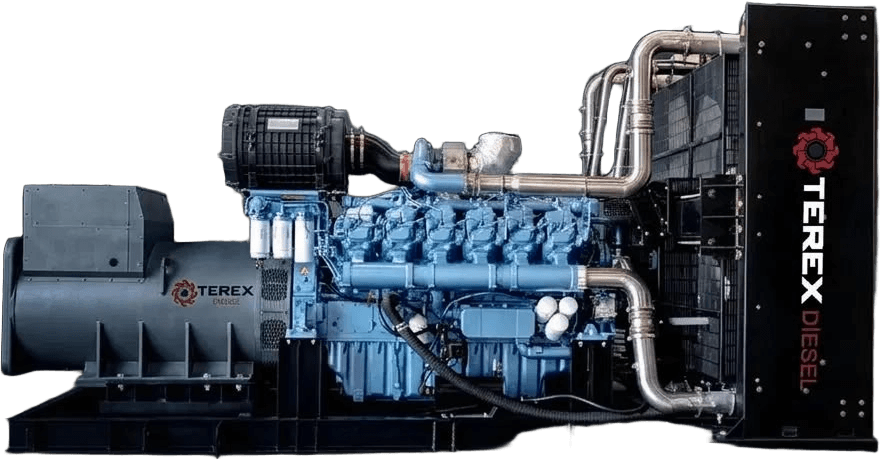
How to Calculate Generator Fuel Consumption
A diesel generator burns about 0.28 L per kWh at full load: 100 kVA ≈ 22 L/h, 250 kVA ≈ 56 L/h. Part-load figures, tank runtime and monthly fuel examples.
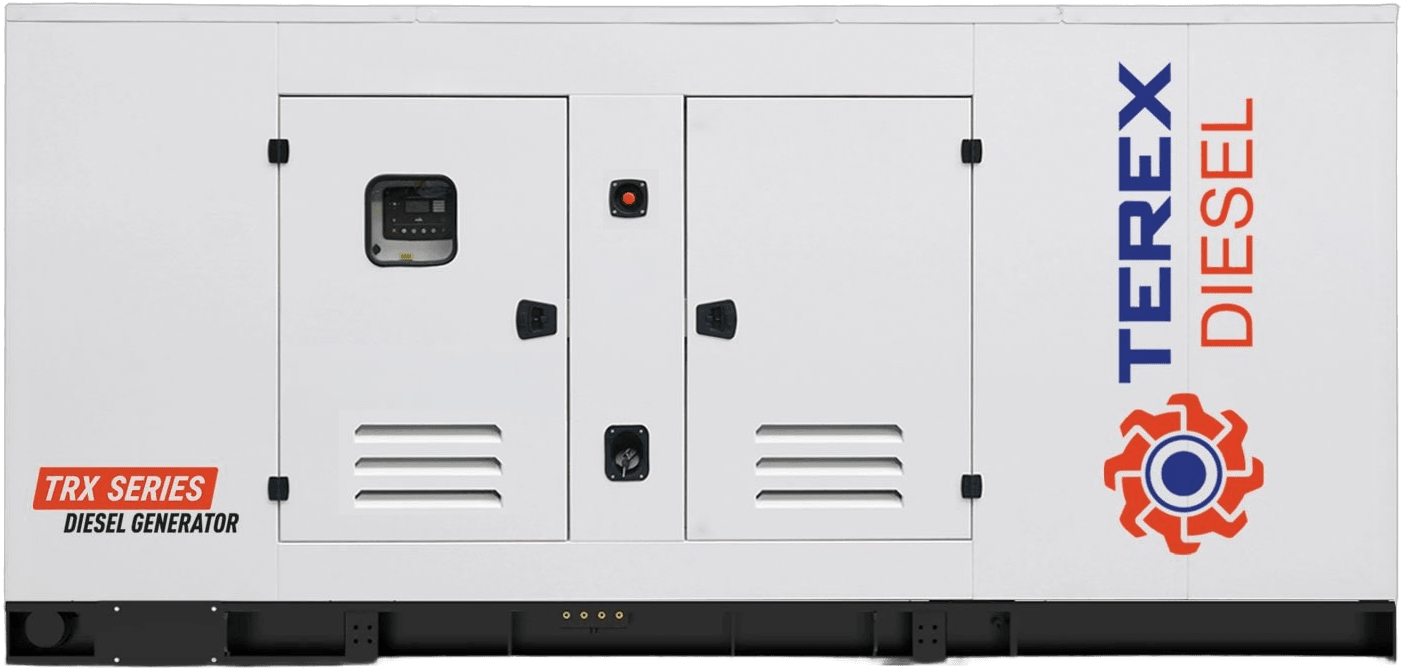
What Size Generator Do I Need?
Add running loads and the largest motor start (DOL ×3, star-delta ×2, soft starter ×1.5), add 20%, then kVA = kW ÷ 0.8. Worked example included.
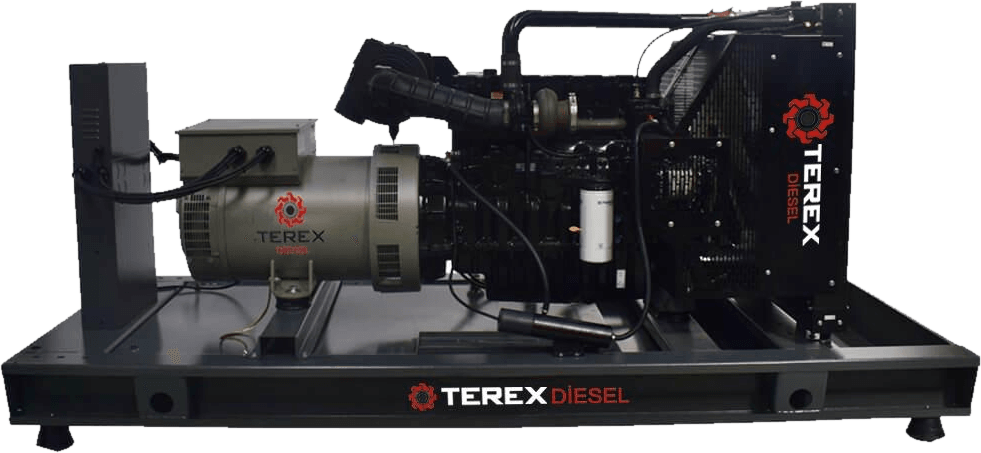
Standby vs Prime vs Continuous Power
Standby: outages only, ≤200 h/year, no overload. Prime: unlimited hours at variable load, typically 10% overload 1 h in 12. Continuous: constant load.
Single-Phase or Three-Phase?
Single phase vs three phase generator: choosing by phase, voltage and current, unbalanced loads and supplying single-phase loads from a 3-phase set.

Choosing a Silent (Canopied) Generator
How to choose a silent generator: dB(A) at 7 metres, sound power vs sound pressure, soundproof canopy design, silencers and the right placement.
50 Hz vs 60 Hz Generators
50 Hz vs 60 Hz generator: 1,500 vs 1,800 rpm, engine and alternator power change, 60 Hz voltages, fuel and noise effects. Don't use a fixed multiplier.