
Generators for Export: 50 Hz, 60 Hz and Voltage Selection
Buying a generator from Türkiye for export: checklist for frequency (50/60 Hz), voltage, site conditions, controller language, fuel quality and origin documents.
Contents
When an overseas buyer purchases a generator from Türkiye, the first questions are usually about power and price. Yet the details that cause problems on site are mostly elsewhere: the wrong frequency, a voltage that does not match, power not calculated for the ambient temperature, or a missing document at customs. In this article we go through the points that should be clarified from the start when you order a diesel generator from us for export.
1. Frequency: 50 Hz or 60 Hz?
Electricity grids around the world operate at two frequencies. Europe, most of Africa, most of the Middle East, Central Asia and the Caucasus use 50 Hz. Most of the Americas, Saudi Arabia and some Asian countries use 60 Hz. In some countries, both frequencies exist side by side in different regions.
In a generator, frequency is determined by engine speed:
- 50 Hz sets run at 1,500 rpm.
- 60 Hz sets run at 1,800 rpm.
The same engine can deliver more power at 1,800 rpm, but the alternator and cooling system must also be selected for this operating point. A 60 Hz set should therefore not be thought of simply as a 50 Hz model with the speed turned up. Our 60 Hz models are identified by the -60 HZ suffix at the end of the model code and come with a separate data sheet. For the technical details, see our article on the 50 Hz vs 60 Hz generator difference, and for models, our 60 Hz generators page.
2. Voltage and connection
Even if the frequency is correct, the set cannot be connected to the site if the voltage does not match. The following information must be clear in the order:
| Information | Example values |
|---|---|
| Phase-to-phase / phase-to-neutral voltage | 400/230 V, 380/220 V, 415/240 V, 440 V, 480/277 V |
| Number of phases | Three-phase (common), single-phase (small ratings) |
| Neutral requirement | 4-wire (with neutral) or 3-wire system |
| Earthing system | TN-S, TN-C-S, TT, IT |
The alternator winding and connection are selected according to these values; some alternators can be reconnected for different voltages, others cannot. The earthing system also determines whether the ATS panel should be 3- or 4-pole.
3. Site conditions: temperature, altitude, humidity
The power values on the data sheet refer to standard reference conditions. In regions with high ambient temperatures or high altitude, the engine and alternator are derated. Summer temperatures approaching 50 °C in the Gulf countries and high-altitude sites in Central Asia and the Caucasus are typical examples.
- Power loss is calculated with the engine manufacturer’s derating tables. For details, see our article on generator derating for heat and altitude.
- In very hot regions, a radiator suited to high ambient temperatures is selected.
- In cold climates, the engine block heater is important; an engine block heater and an automatic battery charger are standard on our sets.
- In humid and salty coastal regions, the canopy paint and alternator protection should be assessed separately.
4. Controller and communication
The menu language and communication features of the controller are important for the operating team on site to use the set correctly. In the order, state:
- Preferred controller make (our range includes options such as Datakom, Deep Sea and ComAp; details on the generator controllers page)
- Remote monitoring requirement (GSM, Ethernet, RS485)
- Whether an ATS panel is needed for automatic operation
- Synchronisation requirements if several sets will run in parallel
5. Fuel quality
In some markets, the sulphur and water content of diesel fuel can be high. In regions with poor fuel quality, a pre-filter with water separator, more frequent filter changes and the right choice of engine become important. Engines with higher emission classes may require low-sulphur fuel; this topic is covered in our article on Stage emission classes.
6. Documents and customs
For export, preparing the documents correctly from the start is necessary so that the shipment is not held up at customs:
- Certificate of origin: issued for export shipments.
- A.TR movement certificate: issued for shipments to European Union countries; under the customs union, the buyer pays no customs duty.
- EUR.1: can be issued for preferential origin for countries that have a free trade agreement with Türkiye.
- Conformity documents: the conformity documents required by the target market (EAC, SASO/SABER, ESMA, etc.) can be provided.
- Company certificates: ISO 9001 · CE · TSE-HYB.
- Technical file: data sheet, operation and maintenance manual, test report, wiring diagrams.
For the steps of the purchasing process, see our export process page.
7. Spare parts and maintenance
Once the set is installed, the first need is filters and consumables. Ordering the first service kit (oil, fuel and air filters) together with the set avoids searching for parts on site. For later needs, see our spare parts supply page.
Pre-order checklist
- Have the frequency (50/60 Hz) and voltage been confirmed against the site’s electrical design?
- Have the number of phases, neutral and earthing system been specified?
- Has the power been checked for the maximum ambient temperature and altitude?
- Have the controller, remote monitoring and ATS requirements been written down?
- Have the documents required by the destination country been listed?
- Have consumables for the first service been added to the order?
If you send this information with your quotation request, we can specify the frequency, voltage and equipment of the set correctly from the start. For the markets we serve, see our export page.
Planning a generator for a project?
Send us the power, voltage and destination. We reply with a suitable model, the factory price and the lead time within 24 hours on working days.
Frequently asked questions
Can a 50 Hz generator be used in a 60 Hz country?
Not directly. Frequency is determined by engine speed: 50 Hz sets run at 1,500 rpm, 60 Hz sets at 1,800 rpm. For 60 Hz, the set is prepared as a 60 Hz set together with the engine speed setting, alternator winding and controller settings. The frequency must always be stated in the order.
Which documents are issued for export?
A certificate of origin is issued for export shipments; for shipments to European Union countries the A.TR movement certificate can be issued, and EUR.1 for countries with a free trade agreement. The conformity documents required by the target market (EAC, SASO/SABER, ESMA, etc.) can be provided.
What voltage should the generator be set to?
It is set according to the mains voltage in the country of installation and the site's distribution system. For example, the common value in 50 Hz countries is 400/230 V; in 60 Hz countries different values such as 380/220 V, 440 V or 480/277 V are used. The correct value should be taken from the site's electrical design.
Featured models
Technical data of models in frequently requested power ratings:
- 38 kVATRX QZ TA 0038Quartz Q490ZD
- 58 kVATRX QZ TA 0058Quartz Q4105D
- 77 kVATRX QZ TA 0077Quartz Q4105ZD
- 105 kVATRX QZ TA 0105Quartz Q4105AZLD
- 155 kVATRX QZ TA 0155Quartz Q6105AZLD
- 260 kVATRX SD TA 0260SDEC SC9D310D2
- 300 kVATRX SD TA 0300SDEC SC9D340D2
- 400 kVATRX SD TA 0400SDEC SC15G500D2
- 520 kVATRX SD TA 0520SDEC SC25G610D2
Related articles
What Size Generator Do I Need?
Add running loads and the largest motor start (DOL ×3, star-delta ×2, soft starter ×1.5), add 20%, then kVA = kW ÷ 0.8. Worked example included.
Standby vs Prime vs Continuous Power
Standby: outages only, ≤200 h/year, no overload. Prime: unlimited hours at variable load, typically 10% overload 1 h in 12. Continuous: constant load.
Single-Phase or Three-Phase?
Single phase vs three phase generator: choosing by phase, voltage and current, unbalanced loads and supplying single-phase loads from a 3-phase set.

Choosing a Silent (Canopied) Generator
How to choose a silent generator: dB(A) at 7 metres, sound power vs sound pressure, soundproof canopy design, silencers and the right placement.
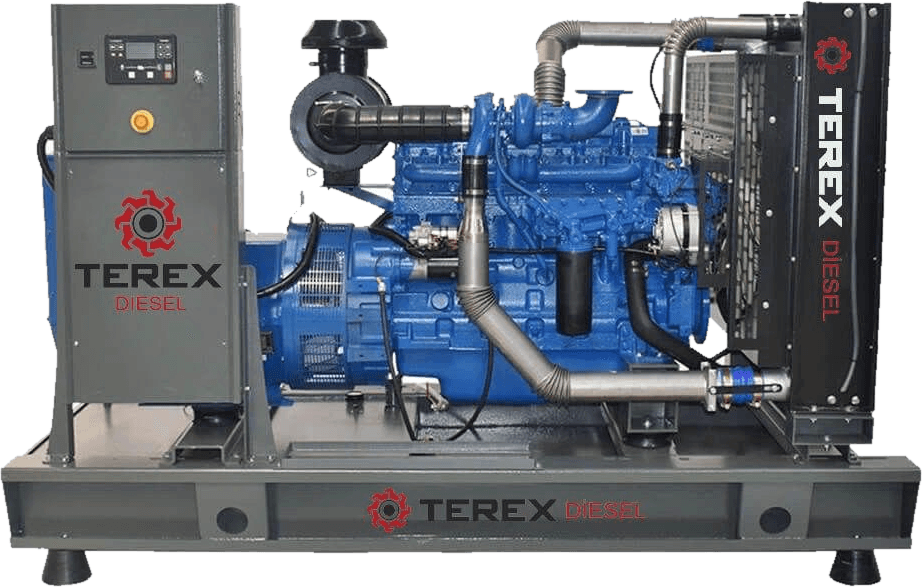
50 Hz vs 60 Hz Generators
50 Hz vs 60 Hz generator: 1,500 vs 1,800 rpm, engine and alternator power change, 60 Hz voltages, fuel and noise effects. Don't use a fixed multiplier.
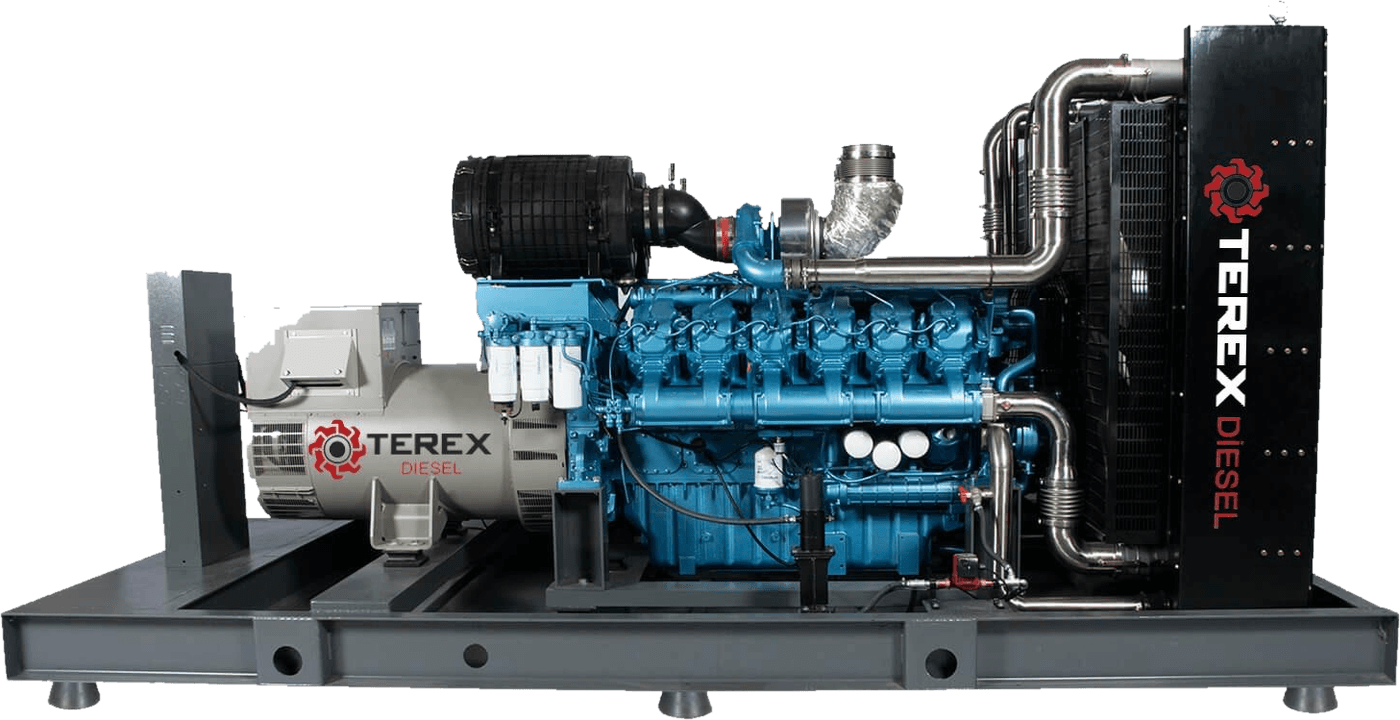
Generator Derating for Heat and Altitude
Why do generators lose power in heat and at altitude? ISO 3046 reference conditions, derating curves, alternator effects and a worked example.