
How to Choose a Construction Site Generator
Choosing a construction site generator: power by build phase, crane and welding loads, trailer or canopied set, fuel, noise, earthing and site safety.
Contents
On a construction project, the demand for electricity is not constant. During excavation, a few pumps and lighting are enough; in the structural phase, the tower crane, concrete pump and welding machines come into play; during finishing works the load falls but the running time gets longer. The right site generator is one that meets this changing load profile, is easy to move around the site and can go for days without attention in harsh conditions. Below we take the questions to ask during selection one by one.
1. Split the loads by construction phase
Instead of a single total power, consider the peak of each phase separately:
| Phase | Typical loads | Point to watch |
|---|---|---|
| Excavation and foundations | Drainage pumps, lighting, site office | Starting current of the pumps |
| Structural works | Tower crane, concrete pump, vibrators, welding machines | Simultaneous hoisting and slewing load of the crane |
| Finishing works | Hand tools, compressor, heaters, lighting | Long running time, low load |
| Site camp | Container offices, dormitories, canteen, air conditioning | Uninterrupted running through the night |
Tower cranes and concrete pumps are the loads that put the most strain on a generator’s starting capacity. Crane manufacturers usually state the recommended minimum generator power in the operating manual; if this value is not checked and only the motor ratings are added up, the set may be undersized. For starting calculations for motor loads, see our article on generator sizing for electric motors.
2. Welding machines and hand tools
Many single-phase tools and welding machines are used on site. If these are distributed unevenly across the phases of a three-phase generator, one phase is overloaded while the others are lightly loaded. Practical recommendations:
- Split single-phase loads as evenly as possible across the three phases in the distribution board.
- Inverter welding machines generally work well with generators, but where there are many of them the harmonic effect should be assessed.
- If significant imbalance between phases is expected, the alternator rating should be selected accordingly.
3. Transport: trailer, skid or canopy
At the end of the project, the site generator moves to the next site. The way it is transported is therefore as important as its power:
- Trailer-mounted sets suit sites that move often and road construction work. We build the trailers in our own plant, and sets of every rating in our range can be supplied trailer-mounted. For details, see our trailer-mounted generators page.
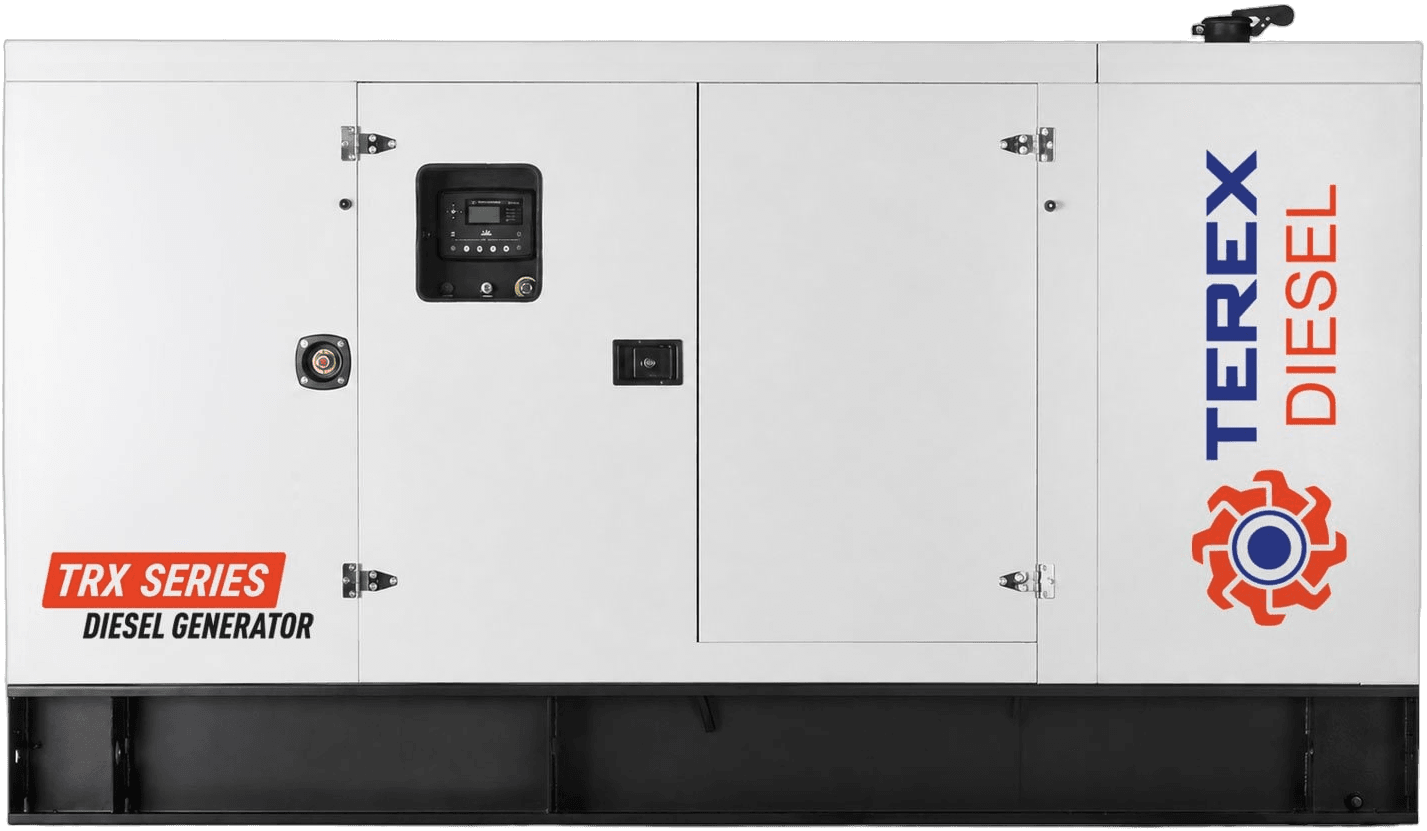
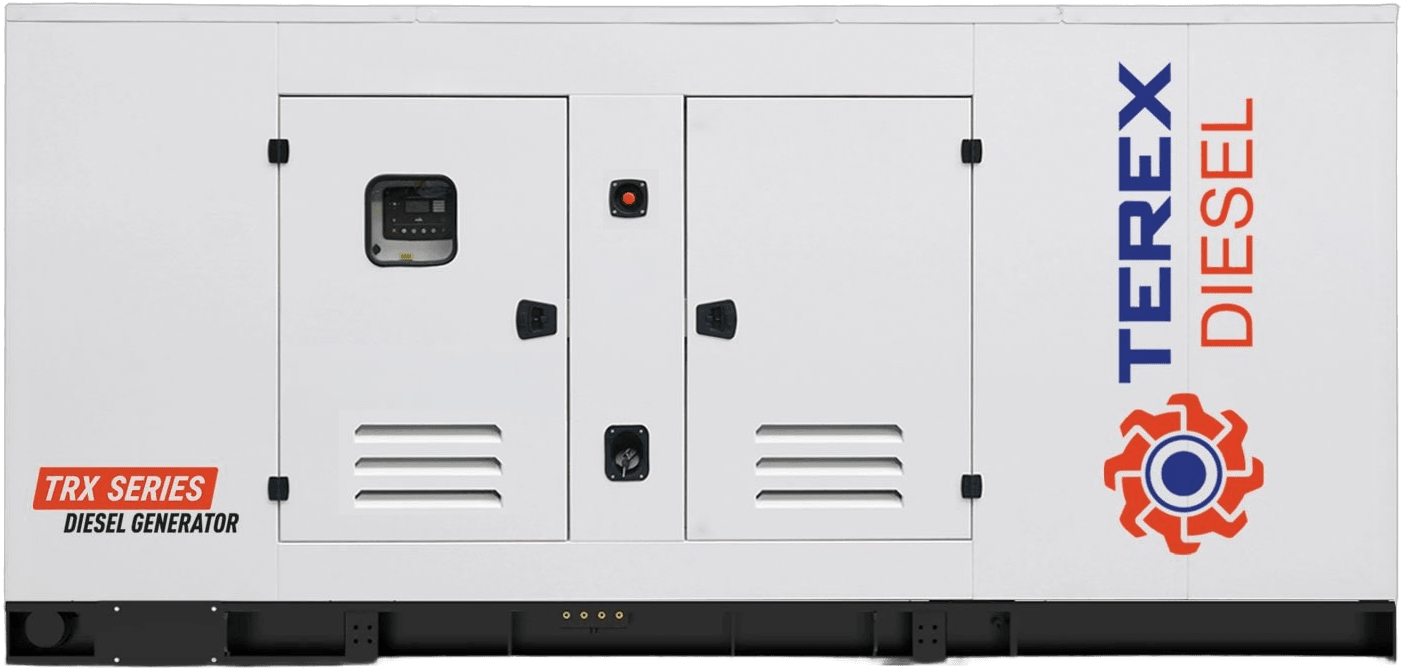
- Canopied (sound-attenuated) sets protect the engine from dust, rain and impact. On sites close to residential areas, they reduce noise complaints.
- A base frame with lifting points and forklift pockets allows safe loading by crane or forklift.
4. Fuel: plan refuelling frequency from the start
The most common reason a generator stops on site is not a fault but running out of fuel. During selection, clarify the following:
- How many hours a day, and at what average load, will the set run?
- How often can fuel be delivered?
- Is the built-in tank sufficient, or is an additional external tank needed?
We explain with an example how to calculate tank capacity in our article on generator fuel tank sizing. Because water and sediment often get into fuel on construction sites, a pre-filter with water separator and regular draining of the tank bottom are useful.
5. Site conditions: dust, heat, cold
- Dust: the air filter clogs much faster than normal on a construction site. Shorten the filter check interval and, if possible, use a filter with a restriction indicator.
- Heat: in summer, the inside of a canopy working in the sun heats up. The front of the radiator and the canopy air inlets must not be blocked by stockpiled materials.
- Cold: on winter sites, an engine block heater and a battery charger are important for easy first starts; both are standard on our sets. For details, see our article on generator cold starting.
6. Electrical safety
A construction site is a high-risk working environment for electrical accidents. On the generator side, the following measures should be treated as mandatory:
- Earthing of the set and distribution boards, and measurement of the earth resistance
- Residual current protection on the output circuits
- Cables routed with protection across vehicle routes
- An emergency stop button that is easy to reach
Details on earthing are given in our article on generator earthing. The occupational health and safety legislation in force should be followed for the rules.
7. Buy or rent?
For needs of a few weeks limited to a single project, renting is usually more sensible. In Türkiye only, we offer a generator rental service from 30 to 1000 kVA on a daily, weekly, monthly and long-term basis. If your company runs several sites throughout the year, the option of buying should be assessed together with the annual running hours of the set and how maintenance is organised. Our article Rent or buy a generator? helps with the comparison.
Short checklist
- Has the peak load of each construction phase been determined separately?
- Has the generator power recommended by the manufacturer been checked for the tower crane and concrete pump?
- Will the set be trailer-mounted, or moved by crane?
- Are the refuelling interval and tank capacity compatible?
- Have earthing and residual current protection been planned?
If you send us your site’s load list and duration, we can determine the right power, type of transport and tank option together. For night work, take a look at our light towers as well.
Planning a generator for a project?
Send us the power, voltage and destination. We reply with a suitable model, the factory price and the lead time within 24 hours on working days.
Frequently asked questions
Should a construction site use one large generator or several smaller ones?
If the site is spread out and the loads are at different points, several medium-sized sets reduce cable costs and voltage drop. If there is a large, continuous load such as a tower crane, using a set dedicated to it and a separate set for the other loads prevents work from stopping completely in the event of a fault. A single large set, on the other hand, keeps refuelling and maintenance at one point.
Should a site generator be canopied or open?
Construction sites are exposed to dust, rain and impact, so canopied (sound-attenuated) sets are generally preferred. The canopy protects the engine from the elements and reduces noise on sites close to residential areas. Open sets are only suitable if they will be placed in an enclosed, sheltered area.
Should a site generator be rented or bought?
If the need is for a few weeks or a single project, renting is usually more economical; if the company opens new sites continuously and the set will move from one site to another all year, buying usually is. The decision depends on the period of use, the annual running hours per set and how maintenance is organised.
Featured models
Technical data of models in frequently requested power ratings:
- 38 kVATRX QZ TA 0038Quartz Q490ZD
- 58 kVATRX QZ TA 0058Quartz Q4105D
- 77 kVATRX QZ TA 0077Quartz Q4105ZD
- 105 kVATRX QZ TA 0105Quartz Q4105AZLD
- 155 kVATRX QZ TA 0155Quartz Q6105AZLD
- 260 kVATRX SD TA 0260SDEC SC9D310D2
- 300 kVATRX SD TA 0300SDEC SC9D340D2
- 400 kVATRX SD TA 0400SDEC SC15G500D2
- 520 kVATRX SD TA 0520SDEC SC25G610D2
Related articles
What Size Generator Do I Need?
Add running loads and the largest motor start (DOL ×3, star-delta ×2, soft starter ×1.5), add 20%, then kVA = kW ÷ 0.8. Worked example included.
Standby vs Prime vs Continuous Power
Standby: outages only, ≤200 h/year, no overload. Prime: unlimited hours at variable load, typically 10% overload 1 h in 12. Continuous: constant load.
Single-Phase or Three-Phase?
Single phase vs three phase generator: choosing by phase, voltage and current, unbalanced loads and supplying single-phase loads from a 3-phase set.

Choosing a Silent (Canopied) Generator
How to choose a silent generator: dB(A) at 7 metres, sound power vs sound pressure, soundproof canopy design, silencers and the right placement.
50 Hz vs 60 Hz Generators
50 Hz vs 60 Hz generator: 1,500 vs 1,800 rpm, engine and alternator power change, 60 Hz voltages, fuel and noise effects. Don't use a fixed multiplier.
Generator Derating for Heat and Altitude
Why do generators lose power in heat and at altitude? ISO 3046 reference conditions, derating curves, alternator effects and a worked example.