
Generator Exhaust Systems: Piping, Silencers and Back Pressure
How to design a generator exhaust line: pipe diameter, bends and length, back pressure limit, silencer grades, flexible connector, insulation and outlet.
Contents
The exhaust line is one of the items where most mistakes are made in generator installation. The mistakes are usually not noticed on the first day. The set runs, but at full load its power falls, exhaust temperature rises and soot and odour build up in the room. A few months later, damage appears in the turbocharger, the gaskets or the pipe hangers. In this article we look at the components of the exhaust system, how the pipe diameter is selected and the points to watch during installation. For other installation topics such as ventilation, fuel and plinth, see our article on generator room and installation.
Parts of the exhaust system
Starting from the engine outlet, a typical generator exhaust line consists of the following parts:
- Flexible connector (bellows): absorbs engine vibration and the thermal expansion of the pipe. It is fitted as close to the engine outlet as possible.
- Silencer: reduces exhaust noise. It can be single- or two-stage.
- Pipes and bends: carry the gas outside. Long-radius bends reduce resistance.
- Hangers and supports: carry the weight of the line while leaving freedom of movement in the direction of expansion.
- Condensate drain: at the lowest point of the line, prevents collected water from flowing back into the engine.
- Outlet termination: rain flap, angled cut or rain cap.
Back pressure: the design criterion of the line
As exhaust gas passes through the pipe, friction and changes of direction create resistance. This resistance, measured at the engine outlet, is called back pressure. Every engine manufacturer states the maximum permitted back pressure on the data sheet; the value is usually given in kilopascals (kPa) or millimetres of water column (mmH2O).
Total back pressure is the sum of three items:
- Straight pipe loss: increases with pipe length and decreases rapidly as the diameter grows.
- Bend and fitting losses: each bend adds resistance equivalent to a certain length of pipe. A sharp bend creates much more resistance than a long-radius bend.
- Silencer loss: the catalogue value from the silencer manufacturer; it is greater for silencers with high attenuation.
If the calculated total exceeds the engine’s limit, there are three options: increase the pipe diameter, reduce the number of bends or select a silencer with lower loss. In practice, the most effective option is usually to go up one pipe size.
Pipe diameter and routing
The following rules make exhaust line design easier:
- Take the line outside by the shortest possible route. Avoid long horizontal runs.
- Treat the engine outlet diameter as the minimum diameter; the diameter is never reduced at any point on the line.
- When the line is longer than a few metres or the number of bends increases, consider the next diameter up.
- Choose long-radius bends; where possible, use two 45° bends instead of one 90° bend.
- Do not combine the exhausts of several generators into a single line. Hot gas and condensate would enter the set that is not running. Each set should be routed outside with its own line.
Silencer selection
Silencers are classified by their level of sound attenuation. Commonly used designations are:
| Silencer type | Typical application |
|---|---|
| Industrial | Industrial zones, construction sites, areas where noise is not critical |
| Residential | Facilities near residential areas, commercial buildings |
| Critical (hospital) | Hospitals, hotels, installations within residential buildings, places with strict noise limits |
As attenuation increases, the silencer becomes larger and its loss increases. For this reason, the noise target should be assessed together with the back pressure calculation. An exhaust silencer only reduces exhaust noise; for engine and fan noise, room insulation or a generator canopy is needed.
Heat, insulation and safety
The exhaust gas of a diesel engine running at full load reaches temperatures of several hundred degrees. Therefore:
- Pipes and silencers inside the room should be covered with thermal insulation. Insulation lowers the room temperature and reduces the risk of burns.
- At wall and roof penetrations, sufficient clearance from combustible materials should be left and a wall sleeve used.
- The weight of the line should be transferred to the hangers, not the engine. If load is placed on the engine outlet, the turbocharger housing and manifold may be damaged.
- The exhaust outlet should be away from windows, ventilation inlets and pedestrian areas. The gas must not be drawn back into the generator’s own air intake.
Condensation and rainwater
When the set stops, water vapour condenses in the exhaust line. Rain can also enter through vertical outlets. If this water reaches the engine, it can cause serious damage on the next start. Precautions:
- Fit a drain valve or condensate drain at the lowest point of the line.
- Use a rain flap or rain cap at the end of a vertical outlet.
- Give horizontal runs a slight fall away from the engine towards the outside.
Exhaust on canopied and containerised sets
On canopied sets, the silencer is inside or on top of the canopy and the exhaust outlet is prepared at the factory. If the set runs outdoors, additional pipework is usually not needed. However, if the set is to be placed in a building recess, a light well or an enclosed car park, the exhaust gas may need to be carried to a safe height. On containerised generators used for high ratings, the exhaust and silencer are mounted on top of the container.
Checklist
- Have the exhaust flow and permitted back pressure been taken from the engine data sheet?
- Has total back pressure been calculated with line length, number of bends and silencer loss?
- Is there a flexible connector at the engine outlet, and is the weight of the line carried by hangers?
- Have the pipes inside the room been insulated, and have sleeves been used at penetrations?
- Are a condensate drain and rain flap in place?
- Does each set have its own exhaust line?
The exhaust line should be designed by a qualified engineer in accordance with the regulations in force. For the exhaust flow and back pressure limit of the set for your project, simply state the model in your quotation request and we will share the data sheet with you.
Planning a generator for a project?
Send us the power, voltage and destination. We reply with a suitable model, the factory price and the lead time within 24 hours on working days.
Frequently asked questions
How is the generator exhaust pipe diameter selected?
The diameter is selected according to the engine's exhaust gas flow and the permitted back pressure limit. Resistance increases as the line gets longer and the number of bends grows; in that case the next pipe size up is used. The diameter of the engine outlet flange is taken as the starting value, but this diameter is not sufficient for long lines. The final selection is made by calculating the line length, number of bends and silencer loss.
What happens if exhaust back pressure is too high?
The engine cannot expel exhaust gas freely. Power falls, fuel consumption and exhaust temperature rise, and black smoke may appear. In the long term the turbocharger and valves may be damaged. For this reason, total back pressure must stay below the limit on the engine manufacturer's data sheet.
Does a canopied generator need separate exhaust pipework?
On canopied sets, the silencer and exhaust outlet come with the canopy; if the set will run outdoors, additional pipework is usually not needed. If a canopied set is to be placed in an enclosed area or right next to a building, the exhaust may need to be extended to a safe point.
Featured models
Technical data of models in frequently requested power ratings:
- 38 kVATRX QZ TA 0038Quartz Q490ZD
- 58 kVATRX QZ TA 0058Quartz Q4105D
- 77 kVATRX QZ TA 0077Quartz Q4105ZD
- 105 kVATRX QZ TA 0105Quartz Q4105AZLD
- 155 kVATRX QZ TA 0155Quartz Q6105AZLD
- 260 kVATRX SD TA 0260SDEC SC9D310D2
- 300 kVATRX SD TA 0300SDEC SC9D340D2
- 400 kVATRX SD TA 0400SDEC SC15G500D2
- 520 kVATRX SD TA 0520SDEC SC25G610D2
Related articles
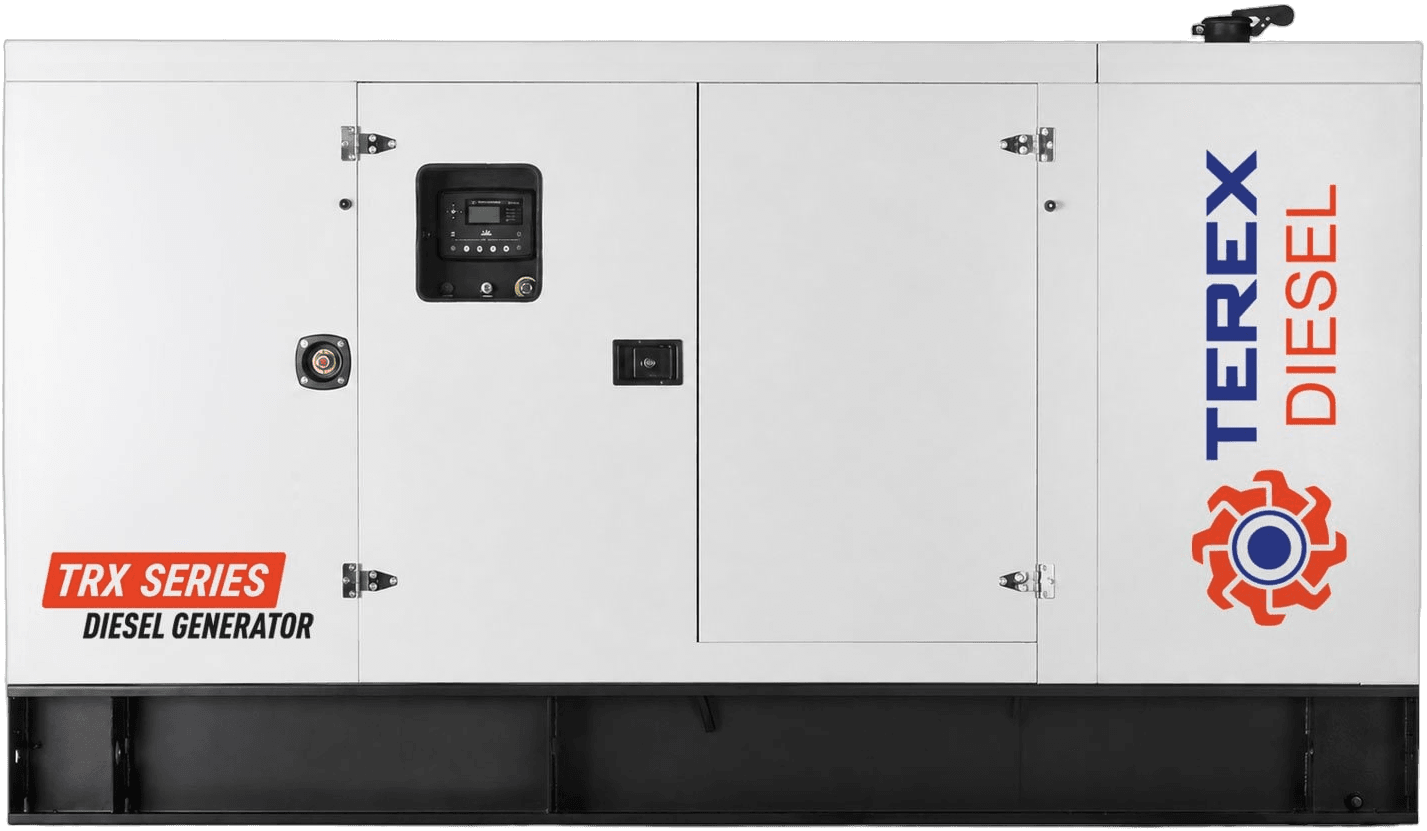
Generator Room and Installation
Generator room ventilation and installation guide: radiator air discharge, exhaust line and back pressure, fuel, concrete plinth, vibration and earthing.
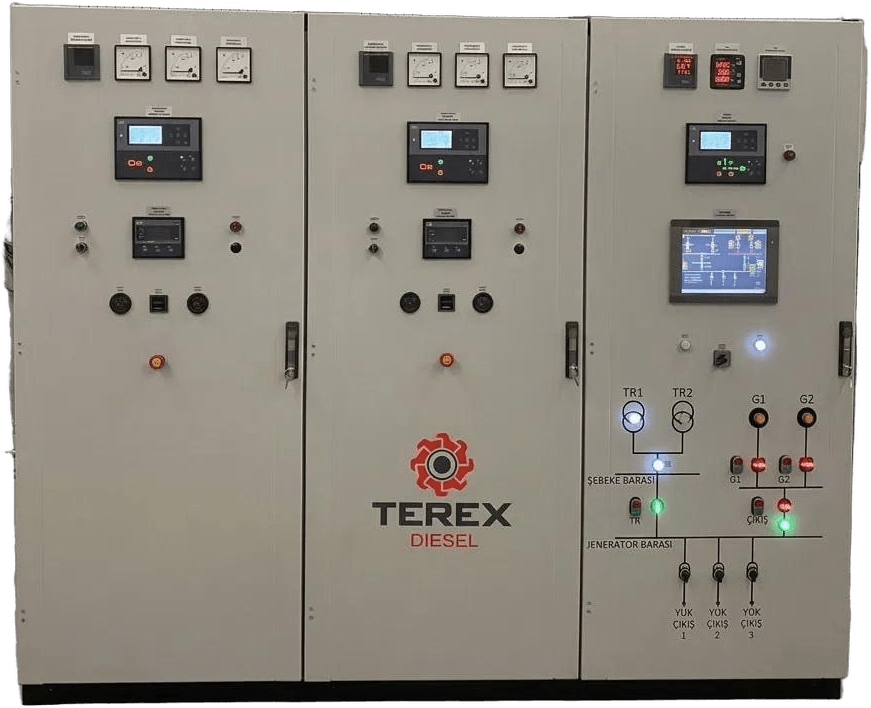
What Is an ATS? Automatic Transfer Switch
What is an ATS and how does it work? Transfer sequence, delay times, 3- or 4-pole choice, current calculation (kVA × 1.44) and a checklist.
Using a UPS with a Generator
For a 200 kVA UPS with an IGBT rectifier, plan about 250–300 kVA of generator; an older 6-pulse UPS may need twice that. Harmonics and frequency.
Generator Earthing (Grounding)
How is a generator earthed? Protective and system earthing, TN and TT systems, the neutral–earth link, ATS pole count and resistance measurement.
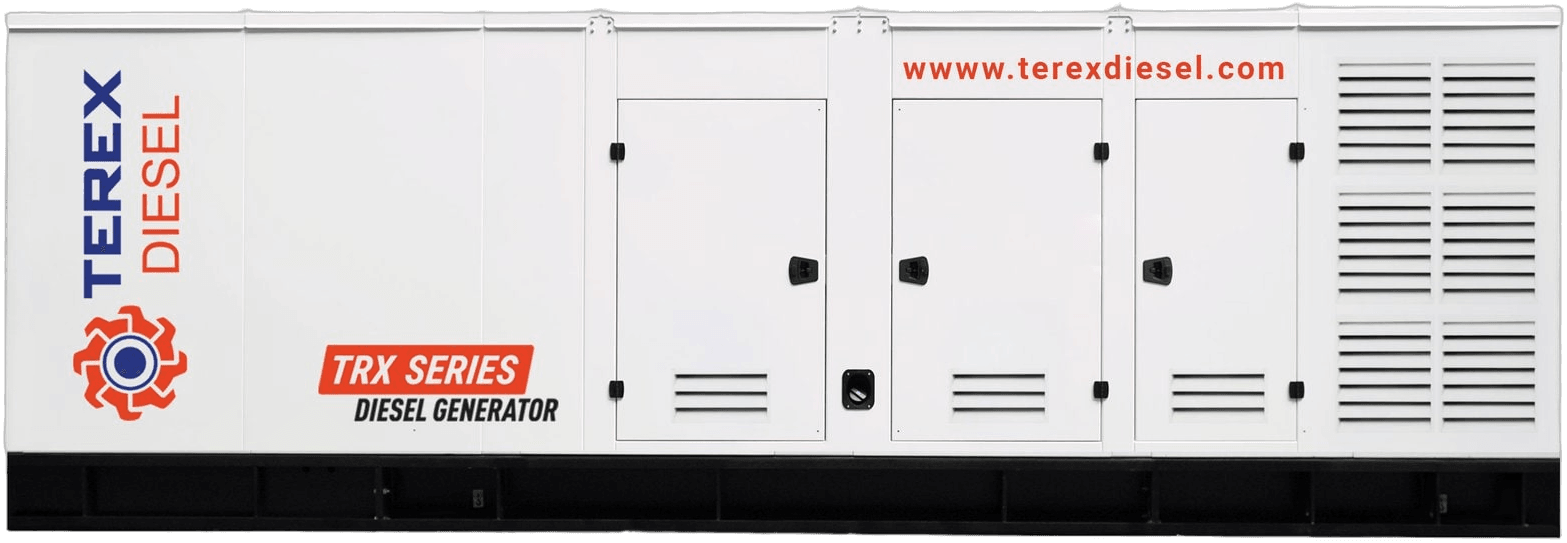
Paralleling (Synchronising) Generators
Generator synchronization (paralleling): sync conditions, kW and kVAr load sharing, N+1 redundancy, grid paralleling and a comparison with a single set.
Remote Generator Monitoring
How does generator remote monitoring work? Controller, GSM/4G, Ethernet, Modbus, what values to monitor, alarm settings and cyber security.